It has been a long time since I have written a film review for this website. I only write reviews when films touch me in a particular way or motivate me to want to share about them, and 2013 was a bad year for me at the movies. But this weekend I saw a film that moved me to tears. And then the internet exploded. Evangelical Christians waged war against each other and against a host of ideas that are alleged to be represented by the film "Noah." As I walked out of church on Sunday, thinking about how the Facebook wars were only intensifying, I came to the understanding that simply writing a review and expressing myself in writing would only fuel the uglier parts of that fire, and not be conducive to productive dialog. I believe that the best dialog occurs face to face as people sit together and discuss as friends around the table. So rather than write a review, I asked two friends, a filmmaker and a pastor, to join me in discussing the film. The immediately agreed. One of them, the pastor, hadn't even seen the movie, but as soon as I asked him, he immediately went out and watched it so he would be prepared to discuss it. I am thankful to both of them for their willingness to serve others and make themselves available for me.
And so, I present Looking for Overland's first video blog! The first section is fairly spoiler free and good to watch whether or not you've seen the film. The remainder of the video tackles the specific issues that are in the film and while it will "spoil" the movie, if you are the kind of person that has read the reviews and articles before seeing the film, you should watch it. It's a worthwhile discussion, even if you ultimately decide to never watch Noah for yourself.
For the first thirty minutes, our panel, filmmaker Brandon Rice, seminary graduate and pastoral staff member Jake Putich, and filmmaker Daniel Noa, discuss their thoughts and takeaways from the film; the second thirty minute section addresses some of the criticisms being leveled against the film from the Christian community, while the last twenty minutes explores the nature of the reaction against Noah and why Christians are so divided over the release of this film. You can also listen to the conversation via SoundCloud.
Click here for more movie reviews.

Showing posts with label Daniel. Show all posts
Showing posts with label Daniel. Show all posts
Wednesday, April 2, 2014


Thursday, August 1, 2013
A Great Day: an Iliad House Day!
So I have a confession to make: I haven't been good with keeping up on blogging because I've been
working on something else. Something really fun.
If you read my review of "The Labyrinth" a year ago, you know I have always been an enthusiastic fan of Adventures in Odyssey. What I did not reveal explicitly in that review was the path that took my professional life into the orbit of men whom I consider to be giants in the Christian entertainment community: the creators and producers of Adventures in Odyssey.
The first episode of AIO I ever heard was "The Imagination Station." A high water mark which saw legendary character Digger Digwillow (Digger Digger Digwillow) go back in time to see Jesus's death and resurrection. Except he didn't actually go back in time. As a child I never understood that. When, in "Lincoln," Jimmy Barclay was unable to prevent the assassination, I assumed it was because he could not change history (or else I would not even be aware of the situation he was referring too). It was not until I was older that I understood what a safe construct the Imagination Station really was (in fact, in "The Mortal Coil" I assumed Whit's adventure about death was actually a time travel journey into your own future, a concept that terrifies me to this day, similar to HG Wells' apocalyptic vision of the end of the world; of nothingness).
But I never expected to meet the writers and creators behind this show. In 2010, I had heard maybe one Odyssey album in ten years when I went to visit some friends in Colorado Springs who are the kind of friends who feel it is their duty to make sure you have a fantastic time when you visit them. They had arranged through another friend to get me an informal tour of Focus on the Family headquarters (formal tours were not available then, though I understand they have since made a comeback). On that tour, we wandered into an office where I met a man named Jonathan Crowe, who's name I had heard and we had a nice conversation about the show and my filmmaking background. This was when I confirmed my suspicion that Odyssey recorded in Los Angeles and I made some breakfast recommendations that I believe the crew still relies on today. In response, Jonathan invited me to attend a recording session some months from then and I gratefully accepted.
Fast forward several months and Jonathan had suffered a terrible biking accident and couldn't attend the session (he's since fully recovered). But he graciously kept the invitation open and put me in touch with another great member of the Odyssey team, Nathan Hoobler. Nathan served as my tour guide into the production side of AIO, and that day I heard so many voices from my youth (and sadly missed many others). It was a good day, and I ended up helping them shoot a video for the Blackgaard Chronicles set; but ultimately the most eventful meeting I had that day was quite unexpected.
About halfway through the day a man came into the studio that I did not recognize. I knew all the people currently working on the show, and all were, for the most part, present. Then I heard him speak, and I realized who it was: Phil Lollar. But this was quite improbable. Phil had left the show in 2000, and hadn't been involved since. How could this be Phil Lollar? Turns out he was there to act, not produce, and played a small but humorous role in Album 53 (this foreshadowed his expanded role in "The Labyrinth in 55). Ironically, this meant he and I were the oddest men out in the room, and both sort of sat in the back for most of the day. I then later got to have dinner with the entire production team and observe a glorious reunion conversation between Paul McCusker and Phil Lollar (I also bought Paul McCusker a coffee, something I will always be able to say).
It was a fantastic experience, and eventually filed away into my memory. Then one day my old friend Jeremiah called me for a recommendation. He was helping produce the teen program at the Home School Legal Defense Association's National Leaders Conference in Orlando and they were going to do it on radio drama. He said they wanted to get someone from Adventures in Odyssey to be the keynote speaker for the program in Orlando, and since he knew about my experience, he wanted my advice on whom to ask. We discussed the merits of several of the people involved at length, all of whom would have made excellent guests, but it came down to me saying if he wanted someone who is just really funny, engaging, and is going to show the kids a good time, he should ask Phil. He did, and Phil said yes. And that is the conference that is mentioned on the Kickstarter page. That is how the founding members of Guess What met, and where Iliad House, at least for us, began.
It would be some time before I learned of Iliad House, of Professor Portalis, Jesse, and the magnificent Time Train (of doom?). Homer's Odyssey was about a journey, and his Iliad, a battle. But no matter what happens, my life has already been changed. I hope you'll come with us on this journey, and help us make Iliad House by donating to Kickstarter and then telling all your friends.
Here's an exclusive clip about the show only available here on Looking for Overland! Live long and prosper.
 |
| Professor Portalis inside Iliad House |
If you read my review of "The Labyrinth" a year ago, you know I have always been an enthusiastic fan of Adventures in Odyssey. What I did not reveal explicitly in that review was the path that took my professional life into the orbit of men whom I consider to be giants in the Christian entertainment community: the creators and producers of Adventures in Odyssey.
The first episode of AIO I ever heard was "The Imagination Station." A high water mark which saw legendary character Digger Digwillow (Digger Digger Digwillow) go back in time to see Jesus's death and resurrection. Except he didn't actually go back in time. As a child I never understood that. When, in "Lincoln," Jimmy Barclay was unable to prevent the assassination, I assumed it was because he could not change history (or else I would not even be aware of the situation he was referring too). It was not until I was older that I understood what a safe construct the Imagination Station really was (in fact, in "The Mortal Coil" I assumed Whit's adventure about death was actually a time travel journey into your own future, a concept that terrifies me to this day, similar to HG Wells' apocalyptic vision of the end of the world; of nothingness).
But I never expected to meet the writers and creators behind this show. In 2010, I had heard maybe one Odyssey album in ten years when I went to visit some friends in Colorado Springs who are the kind of friends who feel it is their duty to make sure you have a fantastic time when you visit them. They had arranged through another friend to get me an informal tour of Focus on the Family headquarters (formal tours were not available then, though I understand they have since made a comeback). On that tour, we wandered into an office where I met a man named Jonathan Crowe, who's name I had heard and we had a nice conversation about the show and my filmmaking background. This was when I confirmed my suspicion that Odyssey recorded in Los Angeles and I made some breakfast recommendations that I believe the crew still relies on today. In response, Jonathan invited me to attend a recording session some months from then and I gratefully accepted.
Fast forward several months and Jonathan had suffered a terrible biking accident and couldn't attend the session (he's since fully recovered). But he graciously kept the invitation open and put me in touch with another great member of the Odyssey team, Nathan Hoobler. Nathan served as my tour guide into the production side of AIO, and that day I heard so many voices from my youth (and sadly missed many others). It was a good day, and I ended up helping them shoot a video for the Blackgaard Chronicles set; but ultimately the most eventful meeting I had that day was quite unexpected.
About halfway through the day a man came into the studio that I did not recognize. I knew all the people currently working on the show, and all were, for the most part, present. Then I heard him speak, and I realized who it was: Phil Lollar. But this was quite improbable. Phil had left the show in 2000, and hadn't been involved since. How could this be Phil Lollar? Turns out he was there to act, not produce, and played a small but humorous role in Album 53 (this foreshadowed his expanded role in "The Labyrinth in 55). Ironically, this meant he and I were the oddest men out in the room, and both sort of sat in the back for most of the day. I then later got to have dinner with the entire production team and observe a glorious reunion conversation between Paul McCusker and Phil Lollar (I also bought Paul McCusker a coffee, something I will always be able to say).
It was a fantastic experience, and eventually filed away into my memory. Then one day my old friend Jeremiah called me for a recommendation. He was helping produce the teen program at the Home School Legal Defense Association's National Leaders Conference in Orlando and they were going to do it on radio drama. He said they wanted to get someone from Adventures in Odyssey to be the keynote speaker for the program in Orlando, and since he knew about my experience, he wanted my advice on whom to ask. We discussed the merits of several of the people involved at length, all of whom would have made excellent guests, but it came down to me saying if he wanted someone who is just really funny, engaging, and is going to show the kids a good time, he should ask Phil. He did, and Phil said yes. And that is the conference that is mentioned on the Kickstarter page. That is how the founding members of Guess What met, and where Iliad House, at least for us, began.
It would be some time before I learned of Iliad House, of Professor Portalis, Jesse, and the magnificent Time Train (of doom?). Homer's Odyssey was about a journey, and his Iliad, a battle. But no matter what happens, my life has already been changed. I hope you'll come with us on this journey, and help us make Iliad House by donating to Kickstarter and then telling all your friends.
Here's an exclusive clip about the show only available here on Looking for Overland! Live long and prosper.
Wednesday, July 3, 2013
True Christian Films
In response to this article on Rick Santorum's new position as CEO of a production company (and with all respect to Senator Santorum), I had the following response on Facebook:
This article uncovers exactly what is wrong with Christian films right here when it says "One of the reasons might be the fact that christian movies are not global. They don’t translate well into other cultures."
This boggles my mind. If there is one religion that should translate to every culture (and mostly has, at one time or another) it's Christianity. So why don't Christian films?
Here's why: they are not "Christian". They are odes to a moralistic, American-dream centric, "wholesome" "family-friendly" lifestyle that has had the result of alienating in this country every person that does not conform to that image. This lifestyle is not a religion, but instead uses Christianity as a tool to attain its goal of cultural personal peace and affluence.
True Christianity speaks to the heart. It speaks to the broken and the failed; the shameful. It is not "family friendly," for the very things you wish hidden from your children are the very things Christ came to save us from. How can you tell his story without them?
Allowing this Leave it to Beaver style "Christianity" to be the one that represents us to the culture is another in a long line of mistakes from the American church, a group which is quickly sliding into irrelevancy. These "leaders" are admitting their goal is not to change the culture but to insulate those they believe to be on the "inside" from those outside. It is inward, not outward focused. This is not "Christian," nor is it worthy of the name.
Saturday, May 18, 2013
Star Trek... Into Reruns!
Update: iTunes is running a sale on all Star Trek films and TV seasons. For those of you interested I recommend you check it out.
Original Post:
I am big Star Trek fan. I've been sitting and reading articles about the new film and the series and disagreeing at various points, and realized that I was getting frustrated by them. Then I realized that "I have a blog," which means I can have my say. So indulge me while I give you a primer on Star Trek.
 |
| Gene Roddenberry |
Famously, Star Trek was canceled because network ratings figures did not use demographics like they do today. Star Trek was incredibly popular in the 18-35 "demo", but no one knew. Throughout the 1970's it became a touchstone for youth culture. It was after the release of the first "Star Wars" in 1977 that Paramount decided it wanted to compete in the sci-fi craze (the best modern comparison is the superhero film).
This began the second longest running film franchise in history (both in years and installments), behind the James Bond series. From 1979-2013, Paramount has produced 12 films, and 4 additional tv series. Rather than to into detail on the entire history, I am going to give you my recommendations on what you should watch. Many of the things I don't list may still be worthwhile for you once you've seen the others, and some I won't list aren't worth your time at all. Many of you will disagree with my recommendations, but this is my blog, so I get to be right.
1) Star Trek: the Original Series
 |
| Kirk and Spock's stunt double battle to the death! |
 This one is easy. It's currently on Netflix in glorious HD. But don't start at the beginning, you won't like it. However, unlike modern shows, it got good very quickly. Start about halfway into the first season and then watch through the second season. If you need an even more abbreviated schedule, try the episodes "Balance of Terror," "The Galileo 7," "Space Seed" (prequel to Wrath of Khan), "Errand of Mercy," "The City on the Edge of Forever" (consistently voted the best Star Trek episode), "Amok Time," "Mirror, Mirror," "The Doomsday Machine," "I, Mudd," "Journey to Babel," "The Trouble with Tribbles," "A Piece of the Action," and the only entry from season 3, "The Enterprise Incident." For you modern kids, the episodes all feature a 2006 40th Anniversary restoration which features new (but retro) digital effects.
2) Star Trek Films

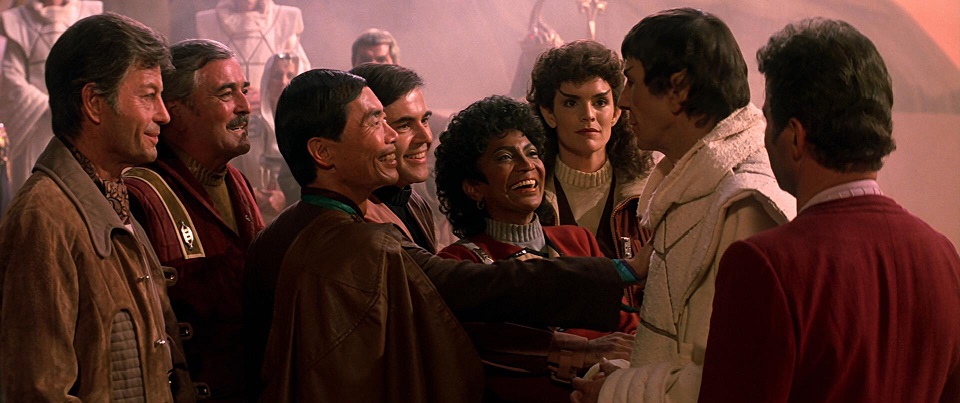
You do not need to watch all of the films. I actually advise against it unless you are really devoted. But you do need to watch some of them in a certain order. Some of these films will be sporadically available on Netflix, but not all, which, unfortunately, means you'll have to find a friend that owns them.
 Star Trek II: The Wrath of Khan - the one that made Star Trek real |
 |
Star Trek III: The Search for Spock - the one that made Star Trek feel
 |
Star Trek IV: The Voyage Home - the one that made Star Trek funny
|
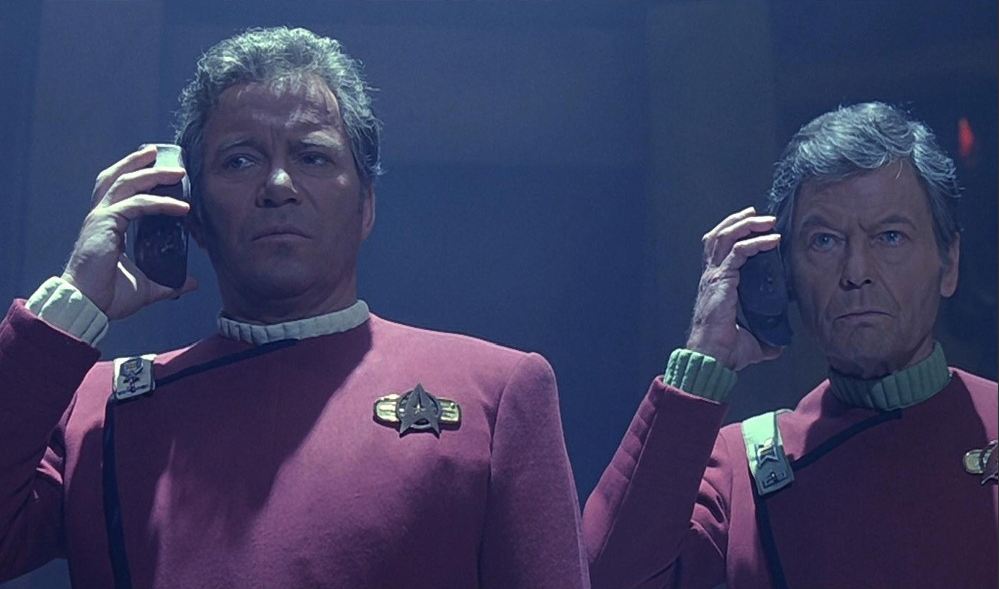
Star Trek VI: The Undiscovered Country - the one that ended the Cold War

Star Trek: First Contact - it has the Borg.
3) Star Trek: Enterprise
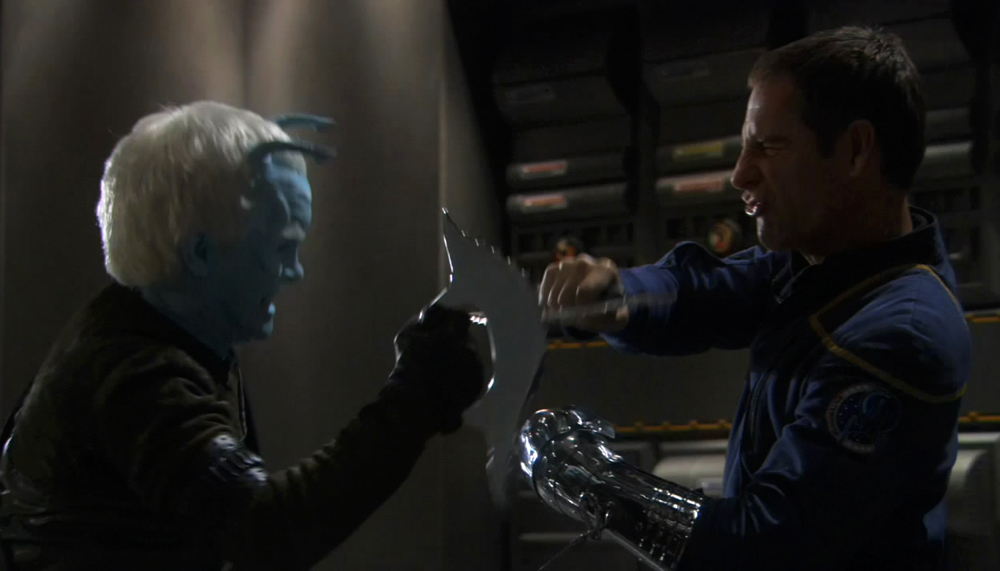
 In a way, this is a proto-version of what JJ Abrams eventually succeeded at, which is to attempt to recapture the energy and spirit of the original series with new actors. A straight reboot was considered unthinkable, but a prequel series was deemed practical. An excellent series lead in Scott Bakula really sets this series apart. Since the original, no Star Trek captain was really able to headline the show (Patrick Stewart, while excellent, was still more the head of an ensemble). Bakula's Archer was a kinder, more respectable Kirk, less womanizer and more everyman. Starting out adventurous and curious, he develops more of an edge as the series progresses, eventually almost being spiritually isolated on the show. He is supported by an excellent cast, and one of the great unsung heroes of Star Trek, writer (and fourth season Showrunner) Manny Coto. He and Gene Coon (from the original series) are probably the two best writers to have shaped Star Trek. The connections between this series and the Abrams films are clear, as the new films serve as a better sequel to Enterprise than the original series really could. This series is also available on Netflix in HD, and you should watch the third season (a season long story arc) and much of the fourth. As a fairly recent show (canceled in 2005), it's very palatable to a modern audience. A small "resurrect Enteprise on Netflix" movement has quietly begun on Facebook in the wake of leaked information indicating its Netflix viewing figures are very good.
4) Star Trek and Star Trek Into Darkness

JJ Abrams' films that are more films based on Star Trek than Star Trek films. Very entertaining, capturing much of the fun and essence of the original. Good entertainment, buy a ticket. I can't review STID yet because its impossible to do without spoilers. But it's worth it. Interestingly, Leonard Nimoy, who was practically exiled by the Star Trek powers that be from 1994-2005 after directing 2 of the films and executive producing one (all three of which are on my list), really supports these films because he feels they honor the work he and his colleagues did in the 60's.
5) Other Stuff
Now I left a ton of stuff off this list! I'll explain why. I hate Voyager. I've tried Deep Space 9, and while I'll admit the concept sounds cool, I have never been able to enjoy it. Watching "The Trouble with Tribbles" back to back with its DS9 homage tells you everything you need to know: it's just not fun or funny. What Deep Space 9 and Voyager are is geeky. That's not a bad thing, but it does make them niche. If you like minutiae and techno-babble you will enjoy these series. Best wishes to you.
 |
| Geek Trek... |
Finally: Star Trek The Next Generation
 |
| 90's Airline Crew |
Click here for more movie reviews.
Thursday, March 28, 2013
"The Bible"
Updated: this series is now available to stream in HD on Netflix. Jeremiah also reviewed the series.
Original Post:
Those of you who read my posts know I get very passionate about films. I love films and I love the medium of visual storytelling. A good story is hard to come by, so when I see one I latch onto it and don't let go. My latest obsession is not a blockbuster, but a modest $22 million project; the ten-hour television miniseries entitled "The Bible."
This title is both deceptive and shockingly descriptive. For you see "The Bible" is not the scriptural summary it might lead you to think it is, but a lean, focused story about Jesus Christ. Don't let the fact that it spends 5 hours on a selection of Old-Testament characters fool you. Their stories are incredibly abbreviated, and though there are still two hours yet remaining, they have already spent four times the amount of screen-time on Jesus then they have on anyone else. This reveals a hidden bias on the part of the filmmakers: the the message of the Bible is primarily about the redemptive mission of Christ, and that the earlier stories primarily exist as the context and introductory chapels of the main narrative. That we should see the sacrifice of Christ in the context of the proposed sacrifice of Isaac, the deliverance he brings in light of Moses and Joshua, his kingship in light of David, and his faithfulness and power in light of Daniel.
If you've read the Bible, you know the story. What's impressive is how closely the series adheres to it. It is surprisingly Protestant in its depiction. Now yes, I'm sure you've heard about the myriad departures and omissions made by the creative staff. But if looked at from the perspective of the many adaptations we've seen over the last ten years, its extremely faithful. More faithful than "The Hobbit" or "The Fellowship of the Ring." If you are looking for an exact visual record of the text of Scripture you will be disappointed. But there is no better way to experience the story of God's redemptive plan this Easter season than watching "The Bible."
The series is beautifully shot in Morocco, and since they shoot all the installments in the same general area, you see great continuity between the time periods. The actors are all unknown in the United States (though if you are like me, you might spot an Indiana Jones villain in there somewhere), and they use a wide ethnic diversity to represent a variety of characters. This is a reaction to the reality that most Bible characters were not British, or likely even white. Jesus is played by a Portuguese actor, angels by a variety of ethnicities, and yes, Samson by an African. If this offends you, I challenge to examine your pre-conceptions of the Bible. Many of the extras are clearly of North African descent (leading to some humorous comparison between one of the characters and President Obama), but again, this is due to the location of the filming of the series.
So now you're sad you've missed the show. Even though the first episode was the cable event of the year with 13 million viewers, and subsequent installments have hit 10 million, you weren't among them. Only one more episode left to air (and on Easter night) on the History Channel. Well I have some suggestions for you.
1: History will probably re-air them. If you have cable you can watch for free.
2: iTunes currently sells a season pass at a very reasonable price. Downside: cut up into hour installments instead of the 2 hours they were aired in. Also poor sound mix.
3: The series gets released on Blu-Ray and DVD on April 2nd, two days after Easter. This is the best way to experience the series, and a wonderful way to host showing for your friends and neighbors.
4: UPDATED in 2014 - the series is now on NETFLIX, in HD, with surround sound, and a spanish language track as well. For those of you with Netflix accounts, this just became a no brainer.

I am a huge fan of this series. Even the soundtrack is top notch with work by Hans Zimmer. I cannot recommend it to you enough. So from me to you, Happy Easter.
Click here for more movie reviews.
Original Post:
Those of you who read my posts know I get very passionate about films. I love films and I love the medium of visual storytelling. A good story is hard to come by, so when I see one I latch onto it and don't let go. My latest obsession is not a blockbuster, but a modest $22 million project; the ten-hour television miniseries entitled "The Bible."
 |
| David, with his friend Uriah, invades Jerusalem. |
 |
| Moses, as deliverer, is a Proto-Christ. |
The series is beautifully shot in Morocco, and since they shoot all the installments in the same general area, you see great continuity between the time periods. The actors are all unknown in the United States (though if you are like me, you might spot an Indiana Jones villain in there somewhere), and they use a wide ethnic diversity to represent a variety of characters. This is a reaction to the reality that most Bible characters were not British, or likely even white. Jesus is played by a Portuguese actor, angels by a variety of ethnicities, and yes, Samson by an African. If this offends you, I challenge to examine your pre-conceptions of the Bible. Many of the extras are clearly of North African descent (leading to some humorous comparison between one of the characters and President Obama), but again, this is due to the location of the filming of the series.
 |
| Only Jesus can throw the stone. |
1: History will probably re-air them. If you have cable you can watch for free.
2: iTunes currently sells a season pass at a very reasonable price. Downside: cut up into hour installments instead of the 2 hours they were aired in. Also poor sound mix.
3: The series gets released on Blu-Ray and DVD on April 2nd, two days after Easter. This is the best way to experience the series, and a wonderful way to host showing for your friends and neighbors.
4: UPDATED in 2014 - the series is now on NETFLIX, in HD, with surround sound, and a spanish language track as well. For those of you with Netflix accounts, this just became a no brainer.
I am a huge fan of this series. Even the soundtrack is top notch with work by Hans Zimmer. I cannot recommend it to you enough. So from me to you, Happy Easter.
Click here for more movie reviews.
Friday, December 21, 2012
The Relevance of The Hobbit Today - Review (Part III)

 Another, perhaps more controversial, aspect of this story, has to do with the dwarves as (rather obvious, I thought) stand-ins for the Jewish people, exiled from their homeland for generations. When Tolkien wrote The Hobbit, there was no State of Israel. The homeland of the Jews had long been ruled by other nations, and Tolkien, with his Western European education, would have most likely often thought back to the Crusades when thinking of the sort of ancient warlike situations he dealt with. The modern, shall we say, egalitarian view of the Crusades did not yet exist in England in the 1930s. It is quite possible that Tolkien thought of "Sarrasins" in "Orcish" terms. The film gives this even more weight, with talk of "others" going back to seize their homeland if they do not hurry. In Tolkien's day, after the First World War, the Middle East was being continually divided up by the western powers, with little thought being given either to the Jews or to the local inhabitants until 1945, long after The Hobbit's publication. So this story, in an odd way, is perhaps Tolkien's own little fantasy of how a very British person (for Bilbo is very mid-century British) could have potentially helped a group of nomadic Jews setting out to reclaim their ancient homeland. It's the very sort of mythic, Homer-esque (no, not Simpson) epic that Tolkien himself was drawn to, and writers often attempt to aspire to what they love.
 Bilbo's eventual realization that he should help these dwarves simply because he can; because he possesses something they do not, is precisely the sort of "love thy neighbor" idea that no one really practices anymore, and thus is not considered "realistic." Our movie heroes must have some pragmatic goal in mind; Batman must be a "symbol" to inspire, because simply saving a couple people on his own really won't change much in the overall scheme of things. Superman must be darker and edgier, because a man who simply flies around saving cats and stopping bank robbers really isn't that interesting anymore. So, in this sense, Bilbo is now the ultimate "anti"-hero. I, for one, think we need more such "anti"-heroes, who are capable of committing acts of kindness, and love, for no good reason at all.
Jump back to Part I, or Part II - An Unexpected Pleasure.
Click here for more movie reviews.
Thursday, December 20, 2012
The Hobbit: An Unexpected Pleasure - Review (Part II)
"I did not give you that map and key so that you could cling to the past." I loved The Hobbit: The Unexpected Journey. I saw the film in 3D (conventional 3D, so there will be no discussion of the controversial 48 Frames Per Second issue here) and found it quite beautiful and immersive. Having seen it again since in 2D, I will say that I felt my eye actually had more to see in the 3D version, and so the film seems edited to favor the 3D experience, which makes sense, considering it was filmed in native 3D using 2 very high definition cameras.
Spoilers for The Hobbit: An Unexpected Journey follow:
 The film is a very fun adventure story, and so very unique in our time. It is based on a third of a book, though I think it would be more accurate to say it is based on a third of a story. Tolkien wrote the entire history of Middle Earth in his books, and this film takes as its inspiration events during this time in that history, not limited solely to events written in The Hobbit itself. It may come as a surprise to many casual book fans that most of the "additional" material presented is not made up; no characters were introduced that do not appear elsewhere in Tolkien's writing, and character histories are, for the most part, respected. Scenes such as the battle outside Moria and the Necromancer are almost entirely lifted from other Tolkien writings, and I think they are well used here. As a child, I was very interested in the Necromancer and Dol Guldor, which Tolkien only briefly references in the book, and am very interested to see Benedict Cumberbatch (of Sherlock fame) play this pre-incarnate version of (spoiler!) Sauron. Since no comprehensive account of this battle between Gandalf and the weaker Sauron exists, this could be quite interesting, especially since, in The Lord of the Rings, Gandalf is clearly afraid of his enemy, and considers him now beyond his skill. (Part of me also hopes the Witch King of Angmar gets his own HBO show, as his history is further hinted at here, and there is enough payoff in The Return of the King to justify a little more of it in the next film). This aspect of the trilogy's plot, which I thought was well set up in this installment, has me the most intrigued, because it is the most original part of the films, and I am curious to see what happens.

I was also pleased at the inclusion of Radagast the Brown Wizard, and shocked and delighted by his depiction. He was actually featured in The Fellowship of the Ring, but removed from the film version. He really gets his moment to shine here though, and I hope we have not seen the last of him. I found the moments of absurdity in the film, such as his rabbit sled, very entertaining. I also enjoyed the depiction of his (and Gandalf's powers) in the film, which are more robust than in The Lord of the Rings. I look forward to the battles between the wizards and the Necromancer; I wonder if Radagast will face death (since he is not in Lord of the Rings, and even in the books, I thought he might be useful), and if Saruman will be guilty of any sort of early treachery. I'd also like to praise their efforts in executing Christoper Lee's return, as his health precluded any trips to New Zealand. They were able to film his dialog on a green-screen set in London, built to match the dimensions of their set in Wellington. I'm not sure if he and McKellen were ever in the same room, but their chemistry was trans-continental.
 Speaking of which, this was Gandalf's movie. Ian McKellen gets top billing for the first time (does this make him eligible for Best Actor?) and he earns it. He glides through this film, firmly rooting it and just making it awesome. Gandalf really is, as Saruman calls him, a "meddler," and is orchestrating this whole situation to a purpose. The interplay between these great "guardians of Middle Earth," sent by divine powers is fascinating. I was also struck that of all the wizards, he is the one running around on catwalks with a sword, cutting great goblins to bits, and force pushing orcs into oblivion. It's a very active life for a wizard in any franchise.
I also appreciated the structure of the film itself. Many more critical of the film than I (including some in my family), found the film boring. The film does spend quite a bit of time in Bag End, toward the beginning. This is because the whole sequence is largely preserved as Tolkien wrote it. This sequence is his true introduction to Middle Earth, and if at some point anyone watches these films starting with The Hobbit, that scene will be crucial. It's the slow introduction to fantasy that often works well with first installments; the original Star Wars is structured similarly. It also lets us feel Bilbo's reluctance. If he is off on his adventure in the first ten minutes, we might be tempted to believe this is ordinary in Middle Earth. But the time it takes to convince him proves it is not. In this way, the film becomes a strong character piece for the titular hobbit. They then do begin their journey, pursued by Orcs. I do wonder if Gandalf's question, "who did you tell?", will get answered in future films. We are not given the answer, but I do wonder if the dwarves have a traitor in their midst? Azog the Goblin, played via motion capture by Manu Bennett, is a formidable opponent. I guess what I really liked about him was he is different from the other Orcs we have seen, more wild, and dangerous. CGI characters do not generally bother me in fantasy films, as I don't find a man with makeup and plastic on his face to be more convincing. Azog is sort of the General Grievous of the movie, and I liked Grievous just fine. Same goes for the Great Goblin himself, who reminded me of Jabba the Hutt, in the best way possible. The Lord of the Rings featured many villains, but none of them were particularly comical, and I enjoyed the change. I also really liked the goblin messenger, who reminded me of Jabba's court jester in Return of the Jedi, also in the best way possible. I enjoyed the structure of the film, featuring set up, light action, then rollicking Indiana Jones style action (Goblin town felt like a very 21st century Temple of Doom) leading into the finale. Much like they did with The Fellowship of the Ring, they were able to craft an ending to the first installment that felt both like an end to this part of the story and also teased what was to come. I am excited for the audiences to see what happens next as the worst is definitely not behind them.
 Of course, the MVP in all this is Martin Freeman as Bilbo. When he was first shown on screen I instantly thought that he was more like Bilbo than Ian Holm was. Peter Jackson is not George Lucas; as such he creates minor inconsistencies as he goes and ignores them. In Fellowship, Gandalf says Bilbo hasn't aged a day. He clearly has. Of course, in Fellowship, Gollum is black skinned with yellow eyes, so visual continuity is not paramount in this series, and I was ok with that, because I felt this film was true to itself; in particular, this Bilbo is true to himself.
Freeman plays every aspect of this character at once, creating a beautiful inner conflict that is a joy to watch. He is at once out of his element and yet embracing his new element as best as any normal person could. He takes to fighting in a way which we never saw Frodo, which makes him the coolest uncle you could ever have. He is also quintessentially British. Elijah Wood and Sean Astin were both Americans, feigning accents. Of the original four hobbits, only Dominic Monaghan was actually British. So, there is a certain restraint in Freeman's performance that I don't believe we saw in any of the hobbits in the previous three films. In that way, he brings real humanity to a role that could have easily been played as a very over-the-top caricature. His groundedness allows us to enjoy the other, more fantastical aspects of the film.
I highly recommend this film if you enjoy fun, entertaining movies. If you hate fun, comedy, CGI, or good british actors, don't go see this movie. I for one love all of the above.
Update: I've since seen the film in 48 frames-per-second, and while I do now believe that 3D is the best way to view this film, I found the seemingly accelerated motion distracting and detracting from certain strong actor performance moments I noticed at the standard speed.
Click for part 3 of my review, "The Relevance of the Hobbit Today,"
Or, go back to Part I.
Click here for more movie reviews.
Spoilers for The Hobbit: An Unexpected Journey follow:
 The film is a very fun adventure story, and so very unique in our time. It is based on a third of a book, though I think it would be more accurate to say it is based on a third of a story. Tolkien wrote the entire history of Middle Earth in his books, and this film takes as its inspiration events during this time in that history, not limited solely to events written in The Hobbit itself. It may come as a surprise to many casual book fans that most of the "additional" material presented is not made up; no characters were introduced that do not appear elsewhere in Tolkien's writing, and character histories are, for the most part, respected. Scenes such as the battle outside Moria and the Necromancer are almost entirely lifted from other Tolkien writings, and I think they are well used here. As a child, I was very interested in the Necromancer and Dol Guldor, which Tolkien only briefly references in the book, and am very interested to see Benedict Cumberbatch (of Sherlock fame) play this pre-incarnate version of (spoiler!) Sauron. Since no comprehensive account of this battle between Gandalf and the weaker Sauron exists, this could be quite interesting, especially since, in The Lord of the Rings, Gandalf is clearly afraid of his enemy, and considers him now beyond his skill. (Part of me also hopes the Witch King of Angmar gets his own HBO show, as his history is further hinted at here, and there is enough payoff in The Return of the King to justify a little more of it in the next film). This aspect of the trilogy's plot, which I thought was well set up in this installment, has me the most intrigued, because it is the most original part of the films, and I am curious to see what happens.
I was also pleased at the inclusion of Radagast the Brown Wizard, and shocked and delighted by his depiction. He was actually featured in The Fellowship of the Ring, but removed from the film version. He really gets his moment to shine here though, and I hope we have not seen the last of him. I found the moments of absurdity in the film, such as his rabbit sled, very entertaining. I also enjoyed the depiction of his (and Gandalf's powers) in the film, which are more robust than in The Lord of the Rings. I look forward to the battles between the wizards and the Necromancer; I wonder if Radagast will face death (since he is not in Lord of the Rings, and even in the books, I thought he might be useful), and if Saruman will be guilty of any sort of early treachery. I'd also like to praise their efforts in executing Christoper Lee's return, as his health precluded any trips to New Zealand. They were able to film his dialog on a green-screen set in London, built to match the dimensions of their set in Wellington. I'm not sure if he and McKellen were ever in the same room, but their chemistry was trans-continental.
 Speaking of which, this was Gandalf's movie. Ian McKellen gets top billing for the first time (does this make him eligible for Best Actor?) and he earns it. He glides through this film, firmly rooting it and just making it awesome. Gandalf really is, as Saruman calls him, a "meddler," and is orchestrating this whole situation to a purpose. The interplay between these great "guardians of Middle Earth," sent by divine powers is fascinating. I was also struck that of all the wizards, he is the one running around on catwalks with a sword, cutting great goblins to bits, and force pushing orcs into oblivion. It's a very active life for a wizard in any franchise.
 I also appreciated the structure of the film itself. Many more critical of the film than I (including some in my family), found the film boring. The film does spend quite a bit of time in Bag End, toward the beginning. This is because the whole sequence is largely preserved as Tolkien wrote it. This sequence is his true introduction to Middle Earth, and if at some point anyone watches these films starting with The Hobbit, that scene will be crucial. It's the slow introduction to fantasy that often works well with first installments; the original Star Wars is structured similarly. It also lets us feel Bilbo's reluctance. If he is off on his adventure in the first ten minutes, we might be tempted to believe this is ordinary in Middle Earth. But the time it takes to convince him proves it is not. In this way, the film becomes a strong character piece for the titular hobbit. They then do begin their journey, pursued by Orcs. I do wonder if Gandalf's question, "who did you tell?", will get answered in future films. We are not given the answer, but I do wonder if the dwarves have a traitor in their midst? Azog the Goblin, played via motion capture by Manu Bennett, is a formidable opponent. I guess what I really liked about him was he is different from the other Orcs we have seen, more wild, and dangerous. CGI characters do not generally bother me in fantasy films, as I don't find a man with makeup and plastic on his face to be more convincing. Azog is sort of the General Grievous of the movie, and I liked Grievous just fine. Same goes for the Great Goblin himself, who reminded me of Jabba the Hutt, in the best way possible. The Lord of the Rings featured many villains, but none of them were particularly comical, and I enjoyed the change. I also really liked the goblin messenger, who reminded me of Jabba's court jester in Return of the Jedi, also in the best way possible. I enjoyed the structure of the film, featuring set up, light action, then rollicking Indiana Jones style action (Goblin town felt like a very 21st century Temple of Doom) leading into the finale. Much like they did with The Fellowship of the Ring, they were able to craft an ending to the first installment that felt both like an end to this part of the story and also teased what was to come. I am excited for the audiences to see what happens next as the worst is definitely not behind them.
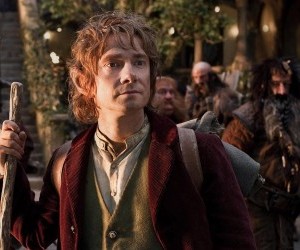
Freeman plays every aspect of this character at once, creating a beautiful inner conflict that is a joy to watch. He is at once out of his element and yet embracing his new element as best as any normal person could. He takes to fighting in a way which we never saw Frodo, which makes him the coolest uncle you could ever have. He is also quintessentially British. Elijah Wood and Sean Astin were both Americans, feigning accents. Of the original four hobbits, only Dominic Monaghan was actually British. So, there is a certain restraint in Freeman's performance that I don't believe we saw in any of the hobbits in the previous three films. In that way, he brings real humanity to a role that could have easily been played as a very over-the-top caricature. His groundedness allows us to enjoy the other, more fantastical aspects of the film.
I highly recommend this film if you enjoy fun, entertaining movies. If you hate fun, comedy, CGI, or good british actors, don't go see this movie. I for one love all of the above.
Update: I've since seen the film in 48 frames-per-second, and while I do now believe that 3D is the best way to view this film, I found the seemingly accelerated motion distracting and detracting from certain strong actor performance moments I noticed at the standard speed.
Click for part 3 of my review, "The Relevance of the Hobbit Today,"
Or, go back to Part I.
Click here for more movie reviews.
Wednesday, December 19, 2012
The Hobbit: An Unexpected Journey - Review (Part I)
There is a disturbing trend happening with major movie releases these days. According to critics (and many audience members), a new film is either an amazingly surprising hit, or it is a disappointment. This verdict can almost be completely pre-determined by the collective expectations preceding the film's release. With almost no films budgeted over $100 million based on original material, all major releases are either sequels (or prequels, which are still actually sequels) or based on other media such as books, tv shows, comic book characters, or, rarely, plays; which means that each has dedicated fans who have very ingrained pre-conceived notions about what their favorite thing is really all about.
Before 2001, this was why most successful works of fiction were not made into films. The conventional wisdom was that film adaptations could not do major works of fiction justice. One only has to watch the Armand Assante version of The Odyssey or the BBC productions of The Chronicles of Narnia to see that this is true. Even most comic book films of the period were dismal both in their quality and in their ability to translate what millions loved into something that worked on the screen.
But The Lord of the Rings: The Fellowship of the Ring (2001) changed all of this. A hit with fans of the book and general audiences alike, this film opened the door to what has become a decade of, well, unoriginality at the movies. So, in 2012, the tentpole releases were The Avengers (sixth in a series), The Dark Knight Rises (third, or seventh, or eighth, depending on how you count), The Bourne Legacy (fourth), Skyfall (23rd), and now The Hobbit: An Unexpected Journey. With The Avengers, many doubted that anyone could make a film with so many super heroes in it work. They were pleasantly surprised that it did work and so one of the slimmest plotted films of the year went down as one of its best. Whereas the critics were expecting the second coming of Christ with The Dark Knight Rises, and instead greeted it with indifference, perhaps not liking so much what it had to say.

A similar phenomenon occurred with The Hobbit: An Unexpected Journey in that The Lord of the Rings Trilogy is one of the few films of the last decade everyone can admit to liking without drawing looks of disgust from one corner of the room. So, many in the media were looking forward to experiencing a new revelation in cinema. Suffice to say they did not. Nor should they have.
Tolkien's The Fellowship of the Ring is arguably his greatest single work. The amount of character development and pathos in that book is unmatched in his other writings. If you've read The Silmarillion, you know he actually writes in a very distant, objective style. This is actually one of the reasons The Hobbit is such a short book, page count wise. The stone giant sequence in the film that has been criticized by many is straight from the book, but it only occupies one sentence. It is not described. But in those days, people weren't as critical (or so it would seem), and this was not considered a problem. When translating such a story to film, where things are shown, and not told, one cannot avoid depicting such a fantastic sight. Tolkien's writing is full of such little asides and tangents that are irrelevant to the overall plot but essential to the atmosphere of his fairy tale world.
The Hobbit simply isn't as strong a book as The Fellowship of the Ring; however, it's a great book. It's a funny book, a moving book, a (melo)dramatic book, and a wonderful story. But it is different; and movie goers (and especially critics) don't like "different." They say they do; they will say "this film breaks new ground," or it "defies the stereotype," but it actually doesn't. Skyfall earned a lot of praise for being a "different" kind of Bond film; when in reality, it simply wasn't a Bond film. Had that same film been made under a different name or with a different character, it would not have merited their notice, because it is exactly like every other action film of the past five years. It is in essence not "different," but in line with the styles of the time; this dark, "ultra-real," "gritty," aesthetic that is currently in vogue, where no CGI is used and lots of people die horrifying deaths. In Skyfall, our "hero" saves no one, and does nothing remotely heroic. This was loved by the critics of our day. "The Hobbit: An Unexpected Journey" does not fall in line with this aesthetic, and therefore has not earned their favor.
Continue on to Part II - An Unexpected Pleasure.
Or skip to Part III - The Relevance of the Hobbit Today.

Click here for more movie reviews.
 |
| Calypso and Assante from "The Odyssey" (1997) |
But The Lord of the Rings: The Fellowship of the Ring (2001) changed all of this. A hit with fans of the book and general audiences alike, this film opened the door to what has become a decade of, well, unoriginality at the movies. So, in 2012, the tentpole releases were The Avengers (sixth in a series), The Dark Knight Rises (third, or seventh, or eighth, depending on how you count), The Bourne Legacy (fourth), Skyfall (23rd), and now The Hobbit: An Unexpected Journey. With The Avengers, many doubted that anyone could make a film with so many super heroes in it work. They were pleasantly surprised that it did work and so one of the slimmest plotted films of the year went down as one of its best. Whereas the critics were expecting the second coming of Christ with The Dark Knight Rises, and instead greeted it with indifference, perhaps not liking so much what it had to say.

A similar phenomenon occurred with The Hobbit: An Unexpected Journey in that The Lord of the Rings Trilogy is one of the few films of the last decade everyone can admit to liking without drawing looks of disgust from one corner of the room. So, many in the media were looking forward to experiencing a new revelation in cinema. Suffice to say they did not. Nor should they have.
Tolkien's The Fellowship of the Ring is arguably his greatest single work. The amount of character development and pathos in that book is unmatched in his other writings. If you've read The Silmarillion, you know he actually writes in a very distant, objective style. This is actually one of the reasons The Hobbit is such a short book, page count wise. The stone giant sequence in the film that has been criticized by many is straight from the book, but it only occupies one sentence. It is not described. But in those days, people weren't as critical (or so it would seem), and this was not considered a problem. When translating such a story to film, where things are shown, and not told, one cannot avoid depicting such a fantastic sight. Tolkien's writing is full of such little asides and tangents that are irrelevant to the overall plot but essential to the atmosphere of his fairy tale world.
 |
| Daniel Craig in "Skyfall" |
Continue on to Part II - An Unexpected Pleasure.
Or skip to Part III - The Relevance of the Hobbit Today.

Click here for more movie reviews.
Wednesday, October 31, 2012
Freedom of Choice?
There are many in our country who ultimately believe that if you could obtain enough information and generate enough accurate algorithms based on sound social science, a centralized command society would not only be efficient but be the best for all. "From each according to his ability, to each according to his need," beautifully realized by science and technology. This is best realized when you hear someone say "communism is great it just doesn't work?" Is it great? Is it really great for the human experience to be homogenized? I recently heard a nutritionist say that talking about what people "should" eat is like deciding what monkeys should eat in a zoo. Should we live in a zoo?
The film I've just completed deals with these issues and many others that face us as we come into this election. The nature and proper role of government is still something that we are very divided on in this country. But where are we headed? A majority of Americans believe we are on the "wrong track." Where does this track take us?
Let's jump ahead and find out:
The film I've just completed deals with these issues and many others that face us as we come into this election. The nature and proper role of government is still something that we are very divided on in this country. But where are we headed? A majority of Americans believe we are on the "wrong track." Where does this track take us?
Let's jump ahead and find out:
Friday, October 12, 2012
President Obama: Between a Rock and a Hard Place
In the last 8 days, this race has radically transformed. Before the first debate, the mood on the right was starting to sour, and the left was starting to grin. It was looking to be quickly sown up for President Obama, regardless of the sagging economy or sad state of affairs overseas.
 Then something unexpected happened. A Republican did better in a presidential debate than any other in my lifetime. If you were a conservative in my generation, you were raised on stories of Ronald Reagan and "there you go again." But they were myths and legends. While Romney's performance was nowhere near as mythical, it was as if a young boy decided to take on some bullies with inspiration from King Arthur. To those of us on the right, it was a breath of the cleanest air we'd smelled in years.
On its own, though, it might have been just a little consolation amidst a big mess. But that same night, Barak Obama, arguably the greatest liberal politician in 50 years, had a bad night. There's been a lot of speculation as to why, but I think the issue is his handling team was so anxious to avoid the weaknesses of their candidate in the format (his 2008 debates against Hillary were not his best moment, whereas Romney came out the winner after 22 debates this spring). Obama couldn't look angry, he couldn't look condescending, he couldn't look mean. Perhaps they hoped Romney would be all those things and Obama would come out looking the bigger man. The problem is that while he might have looked young and virile next to the one-foot-in-the-grave John McCain, next to the extremely fit Romney (who, according to their physical exams, actually has the lower resting heart rate, regardless of the perception of Obama being the cooler cucumber), he seems thin and tired. Quite remarkable seeing as how he is almost ten years younger than his opponent.
 The problem is, of course, that Obama couldn't look angry, but he has a temper (one that we usually see when he's confronted with what he thinks is ignorance or stupidity). He couldn't be condescending, but he's a professor, so he is naturally condescending; and, ultimately, he really wanted to be mean to Mitt Romney. His supporters would have loved it if he was because they hate Mitt Romney and everything he represents. But he needed to win over the moderates, the one's who wanted a "new tone" in Washington. Yet, in an attempt to deny his nature, he lost both.
 That's what the media is not saying (but they are implying), that Obama went in to debate one to sow up any undecided moderates still out there. Instead, he disappointed his own base. You know this because ultimately the story coming out of the debate was not how well Romney did (and he did very well, historically well), but how bad Obama performed (this being the issue that is closer to the media's heart: he let them down). Biden, therefore, was not concerned last night with winning over the undecided independents, but with winning BACK the base. The fact that such a rude, blustering, outrageously patronizing and condescending performance could be greeted with statements on Facebook like "Biden kicked ass tonight!" is proof that the Obama ticket is trying to play to a very specific, angry, liberal group, without whom they cannot win the election. A group that felt unhappy and unrepresented in the last debate. Yet the values of that very group run contrary to those of the moderates. Usually, the liberal candidates play to the moderates and wink to the left. Usually the left accepts this. Not this time.
So, Barak Obama is caught between a rock and a hard place. Biden played to the angry left last night. But will Obama? The left hopes he will; they hope he will ream Mitt Romney and show him how stupid he really is. But Romney is not stupid, and such an outburst would terribly cripple the President with the moderates and undecided. Yet will the left settle for less? With his reelection bid falling to pieces a month out from the election, what does Obama do to save his campaign? What can he do?
I do not have the guts to predict a Romney win at this point (though I bet I could get good odds), but I will say unless Obama can find a way to reframe the race, he is going to continue to lose ground. Since 1960, we have only had three presidents serve out 2 full terms. I do not think it likely that we shall soon have four.
Post by Daniel Noa

On its own, though, it might have been just a little consolation amidst a big mess. But that same night, Barak Obama, arguably the greatest liberal politician in 50 years, had a bad night. There's been a lot of speculation as to why, but I think the issue is his handling team was so anxious to avoid the weaknesses of their candidate in the format (his 2008 debates against Hillary were not his best moment, whereas Romney came out the winner after 22 debates this spring). Obama couldn't look angry, he couldn't look condescending, he couldn't look mean. Perhaps they hoped Romney would be all those things and Obama would come out looking the bigger man. The problem is that while he might have looked young and virile next to the one-foot-in-the-grave John McCain, next to the extremely fit Romney (who, according to their physical exams, actually has the lower resting heart rate, regardless of the perception of Obama being the cooler cucumber), he seems thin and tired. Quite remarkable seeing as how he is almost ten years younger than his opponent.
 The problem is, of course, that Obama couldn't look angry, but he has a temper (one that we usually see when he's confronted with what he thinks is ignorance or stupidity). He couldn't be condescending, but he's a professor, so he is naturally condescending; and, ultimately, he really wanted to be mean to Mitt Romney. His supporters would have loved it if he was because they hate Mitt Romney and everything he represents. But he needed to win over the moderates, the one's who wanted a "new tone" in Washington. Yet, in an attempt to deny his nature, he lost both.
 That's what the media is not saying (but they are implying), that Obama went in to debate one to sow up any undecided moderates still out there. Instead, he disappointed his own base. You know this because ultimately the story coming out of the debate was not how well Romney did (and he did very well, historically well), but how bad Obama performed (this being the issue that is closer to the media's heart: he let them down). Biden, therefore, was not concerned last night with winning over the undecided independents, but with winning BACK the base. The fact that such a rude, blustering, outrageously patronizing and condescending performance could be greeted with statements on Facebook like "Biden kicked ass tonight!" is proof that the Obama ticket is trying to play to a very specific, angry, liberal group, without whom they cannot win the election. A group that felt unhappy and unrepresented in the last debate. Yet the values of that very group run contrary to those of the moderates. Usually, the liberal candidates play to the moderates and wink to the left. Usually the left accepts this. Not this time.
So, Barak Obama is caught between a rock and a hard place. Biden played to the angry left last night. But will Obama? The left hopes he will; they hope he will ream Mitt Romney and show him how stupid he really is. But Romney is not stupid, and such an outburst would terribly cripple the President with the moderates and undecided. Yet will the left settle for less? With his reelection bid falling to pieces a month out from the election, what does Obama do to save his campaign? What can he do?
I do not have the guts to predict a Romney win at this point (though I bet I could get good odds), but I will say unless Obama can find a way to reframe the race, he is going to continue to lose ground. Since 1960, we have only had three presidents serve out 2 full terms. I do not think it likely that we shall soon have four.
Post by Daniel Noa
Friday, July 20, 2012
The Dark Knight Rises: The Apocalypse

No article about The Dark Knight Rises can be written at this point without honoring the victims of the horrific shooting that took place in Aurora, Colorado last night. It is tempting to search for some sort of meaning in an event like this, either to condemn something we don't like or support something we do. Ultimately, this event defies explanation. It was a senseless act of violence. We don't yet know if anything specific precipitated it, but until we do, I suggest we mourn and pray for the victims.
The following article does contain spoilers. I will attempt to be tactful, but it is meant to be a serious discussion of the film, not a cursory review to encourage you to attend.
Batman Begins was the genesis of Batman. The Dark Knight had a strong sense of immediacy, relevance, and tangibility; it was Batman today. So with Batman Begins as the past of the character, and The Dark Knight as the present, The Dark Knight Rises becomes a look at the character's future. It is in essence apocalyptic. There is a certain level of detachment from the proceedings that to my view is the cinematic equivalent of peering into the future. This seems necessary because while the events of The Dark Knight certainly pushed the limits of what we have collectively experienced in the modern world, the events of The Dark Knight Rises go beyond anything in our modern American experience. This makes it less accessible, yet perhaps, in time, we may start to see this film as a sort of prophecy as to where we are headed.
It is appropriate, then, that this film, like Batman Begins, has more elements of the fantastical than its middle, grounded predecessor. It is still, at its core, a comic book movie. One of the things I originally noted about The Dark Knight was that its plot followed the patterns of one of the darker graphic novels, and not the simple build of most films. The Dark Knight Rises also seems to play out as a sort of novel, with large time jumps taking place within it. At midnight, on first viewing, it can be somewhat hard to keep up with, though I expect clearer heads and repeat viewings will clean most of that up.
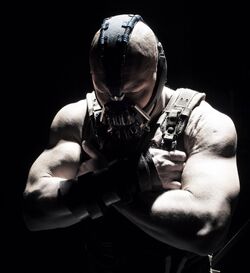

This is not the triumphant third installment one would expect. Unlike the previous two films, which largely stood on their own, this one relies heavily on the others for its emotional punch. It feels most like "an installment," mostly I assume because of the long time jump. There is a lot of ground lost between the second two films, whereas the first two bridged seamlessly. Yet, at the same time, it feels almost like a direct sequel to Batman Begins, with the events of The Dark Knight sort of tossed into the middle. As you can tell, I am still processing the movie.
This is not The Dark Knight. This is not more of same. This is a completely new and different beast. Batman Begins could be compared to the first Superman. The Dark Knight was Heat on steroids. The Dark Knight Rises defies comparison. I need to see it again.
Click here for more movie reviews.
Thursday, July 19, 2012
The Dark Knight: The Descent
The word that best describes the The Dark Knight is in the title, "dark." Even though Batman Begins is not a "light" film and has less scenes taking place in daylight than The Dark Knight has; it is much lighter in tone, and grounded in optimism. Batman believes his existence will lead to a brighter future for Gotham. The events of The Dark Knight threaten to prove him wrong.
If it wasn't already clear in Batman Begins, director Christopher Nolan intends Gotham to be a representation of our world. Not our planet, necessarily, but the space we live and breath in. If Gotham were a real city, people would just leave it and go elsewhere where they don't have killer clowns and scary scarecrows. But you can't escape Gotham. When characters like Lau leave it for Hong Kong, or when Bruce journeys to the Himalayas in Batman Begins, the places they go are symbols for things beyond our world. Perhaps even corresponding to the supernatural. Batman trains in Valhalla only to discover it is closer to purgatory. In The Dark Knight, he goes to the depths of hell to bring back Lau so he can face justice. These journeys have mythic significance.

Batman's answer to Gotham's (hence, the world's) problems is extremism. He goes to the extreme to solves the problem. He flies across the world to bring back Lau. He knocks out Harvey Dent and hides him in a closet to keep him from attempting to fight the Joker. He throws Moroni off the roof. He bugs the entire city to find the Joker. The genius of the Joker is his willingness to match Batman point for point and try to force him over the edge. One could argue he comes very close to success. So close Batman can't recover.
But Batman has moral rules. Which, once his enemies see them, neuter the power of his extremism. Because he has limits. His technology can fail. His plans can be foiled. He can be defeated. Alfred says know your limits. Bruce says Batman has no limits. Alfred says he does and Bruce says he can't afford to know them.
What's scary is as far as he was pushed in The Dark Knight, The Dark Knight Rises threatens to push him even further. How much more can he take?

Yet in the end, Batman believes that this man is the true symbol of hope that the people need, and that a lie, a noble lie, is the best way to preserve that symbol; to make Dent incorruptible. Batman takes on himself all of Dent's sins. This is a messianic act, but it is also a deliberate lie. For unlike Christ who comes and says "I have taken all of your sins upon myself," Batman says "Dent was not the sinner, I am the sinner." A lie cannot bring true salvation. Which is why the ending of The Dark Knight is unsettling, and necessitates a proper conclusion.
All these things, along with fantastic production value and extreme verisimilitude easily makes The Dark Knight one of the best and most definitive comic book films ever made. It is The Empire Strikes Back for our generation. Yet while Nolan definitely hearkens back to the first Star Wars trilogy in The Dark Knight, his conclusion promises to revisit the second Star Wars trilogy, in that the final installment promises to be be darker, and perhaps more fulfilling, than any of the preceding ones.
The Dark Knight Rises opens in theaters tonight at midnight.
Check back tomorrow for our in-depth review.
Check out Jeremiah's review of Batman Begins.
Click here for more movie reviews.
Check out Jeremiah's review of Batman Begins.
Click here for more movie reviews.
Monday, July 2, 2012
A Thought For Those on (or in) the Right
I am not the law student of this blog, so my opinions on matters of law, though hopefully informed, are those of the layman. But as I watch this drama unfold about which side is Roberts on and whether he is a genius or a traitor, I have to remind my politically minded friends that Obamacare did not originate in the courts. It was a piece of legislation that was legally passed (granted, by slim majority) by congress. We cannot look to the court to save us from ourselves. The constitution does not recognize left or right. It simply says "we the people." The founders chose not to empower the gifted, the wise, the correct, but simply the people. For twenty years, we on the right have been unable convince "the people" to give us a majority that wold be able to pass truly conservative legislation. The left did. And they had the guts to pass Obamacare. They paid for it in 2010, but they still got it done. I'm tired of merely hearing people on the right call foul. Sometimes life (and usually politics) isn't fair. The left understands this (though all they clamor for is "fairness.") It's time for us to change message or hang up the towel. We must convince the people not that our way is the most legal or constitutional. That doesn't matter to the average human being. But that our way is best for "the people" as a whole. I believe that ultimately our founders built this nation and it's constitution not as an end in itself, but merely a means. A means for good or evil? That can only be decided by "the people."
Sunday, June 3, 2012
Book Review: "Steve Jobs" by Walter Isaacson
 |
| Screen capture from my iPad. |
I had hoped that reading his life story might help me process the strange emotions his death brought about in me. The last biography (though it was a memoir) I read was George W. Bush's "Decision Points," which was a very pleasant experience that allowed me to relive some of my best memories of the last decade. So it is ironic that rather than being a repeat of that experience, "Steve Jobs" was a tale of power, darkness, and tragedy.
Jobs' life was something of a miracle, though he himself rarely recognized anything but the tragedy. He was born to an unwed, interracial couple in the mid-1950's. As his mother's parents did not approve of the union, no marriage was planned, and so his mother could choose to abort him (an illegal procedure at the time) or give him up for adoption. She chose the latter, and Jobs later would be thankful for this, though he still bore the sting of rejection throughout his life, considering it a sort of curse.
His life story is full of such double edged blessings. From creating a breakthrough company, to losing it, to getting it back bloodied and damaged. Though his highest points were definitely his business, creative, and material successes, his lowest points were found in his relationships. He openly admits he lacked as a father, and his romantic relationships were fraught with troubles.
Interestingly, Isaacson draws a connection (one that Jobs insisted was essential) between the drug and hippie movements of the late 60s and early 70s and the computer revolution of the late 70s and early 80s. To put it simply, they were the same people. These status quo challenging rebels first rebelled against a culture and then against an industry. Jobs famously asked a class of Stanford students in 1982, "How many of you are virgins? How many of you have taken LSD?" He truly believed that sex and drug use were indispensable if one wished to truly open their mind to new possibilities and higher levels of thought. As a practitioner of Zen Buddhism, Jobs had a very spiritual way of viewing human experience that informed all his work.
There is much we can learn from Jobs. Certainly, as a business man and creator there is much we can aspire to be. The book points to his successes not only at Apple but also at Pixar. Until Isaacson reminded me, I had already forgotten that there was a time not too long ago that Disney planned to kick Pixar to the curb and make their own films based on the characters Pixar had created but by right belonged to Disney. Ultimately, Jobs left us two companies that greatly impact our culture and society for good in very different ways. This is worth studying, as neither company's success has truly been replicated.
He possessed keen insight. When talking to President Obama in the fall of 2010, he told him that the U.S. had a shortage of engineers qualified to support heavy manufacturing, and that to compensate, students from other nations who receive an engineering degree here in this country should be granted work visas automatically so that their education could be used here. President Obama was unable to separate this idea from the DREAM Act, which is of course quite different, and this frustrated Jobs. He predicted that Obama would only serve one term unless he was able to have a better relationship with businesses.
Yet there is also much to beware. After reading this book, I am even more convinced that great success comes at great personal cost, both to oneself and one's family and close associates. Jobs hurt many people; some perhaps will never truly emotionally recover. It forces one to ask the question, would you trade what this man lacked (and many normal, even poor people, have) for his wealth, success, and power?
"Steve Jobs" is a long book, but one I highly recommend reading. The history of computers and technology development wasn't taught in my college American History course in 2003, but it is definitely history now and should be studied and learned from. This technology shapes our world in extremely powerful ways; we should understand it, where it came from, and the men who built it.
Friday, May 25, 2012
"The Avengers": An Unprecedented Moment in Film Series History
 | |
| (Photo Courtesy of www.avclub.com) |
But a line can be drawn between 2007 and 2008. 2007 saw the abysmal "Spiderman 3" and the end of an era as America collectively realized such films no longer held any value. 2008 saw the release of "Iron Man" a film that eschewed the usual "secret identity" tropes and allowed itself to revel in its own absurdity while never becoming truly absurd. In this film we were introduced to "Tony Stark," the perfect, sarcastic, wisecracking, and slightly amoral antihero custom built for modern America. Yet over the course of the film he learns the value of honor and courage and begins a transformation. Whether it was the fun, light tone, or the action, or the superb performance from Robert Downey Jr., America embraced the film without reservation, making it a bona fide hit.
Marvel must have anticipated this success, because they decided to include a post credit teaser that changed how we perceive comic book films. I have been told that the character of Nick Fury was originally a white guy, but was redesigned in the 90s to a template based on Samuel L. Jackson. So it was fitting to have Jackson play the character at the end of the film and to have him utter two words that would send comic book lovers into a tizzy: "Avengers Initiative."
Even I, ignorant of all Marvel comics and their back-story, knew that "The Avengers" was a group of super heroes, somewhat like the Justice League, and as I heard more I realized that it was made of all the superheroes that I assumed would never get modern movies. "Hulk" had already flopped, and I never thought that "Captain America" or especially "Thor" would be source material for films that would be embraced by the American public. I was wrong.
"Thor" and "Captain America" were very successful at the box office, with Thor playing especially well overseas. Perhaps anticipating this success, Walt Disney Studios decided to gamble on Marvel's groundbreaking concept and purchased the company for $4 billion in 2009. Their vote of confidence should have been an early warning sign that film and the entertainment industry was about to change.
Both "Thor" and "Captain America" were directed by filmmakers of great pedigree, yet to the unit intimated viewer (such as myself) both were slightly unsatisfying. Having seen "The Avengers," I went back and rewatched both films as well as Iron Man 2, and I realized that all my problems with the films had disappeared. In an odd way, starting with Iron Man 2, Marvel had been producing the prequels first. This meant that each film was slightly unsatisfying on its own, but it was as if they knew that once "The Avengers" had been released, the entire tapestry would make sense.
This sort of continuous storytelling has never been attempted before on screen. In the space of 4 years, Marvel has released and connected 6 films in continuity with each other. Few great franchises can claim this. It took Star Wars over 30 years, Star Trek 12, and most other franchises have been content with trilogies. But audiences love continuity in their media. Perhaps it compensates for the lack of real connection in our modern lives that we feel a need and desire to connect with and follow the lives of fictional characters.
Nonetheless, the Avengers and the series of films that spawned them have rejuvenated comic book films and ensured their survival into the next decade in several ways. They have transformed a genre known for repetitive hijinks into a science-fiction heavy epic that coincides along with our own history and reality (Captain America is a great example of this). They have created larger than life heroes who don't require secret identities or glasses or strange afflictions to exist in our world; regular characters simply accept the existence of giant green monitors or Asgard or super soldiers. Tony Stark ended the war on terror. By watching normal people on screen accept this, it allows us to accept it too.
But what really sells it and draws us in is the length and breadth of the material. Christopher Nolan created an immersive Batman series in 2005, and 7 years later we await installment 3. Marvel produced 6 movies in 4 years. None of which are anywhere near the masterpieces of Nolan, yet equally as successful and engaging. In a time when franchise films get harder and harder to produce, and release dates farther apart (a four year wait between sequels used to be an aberration; now it is an accepted necessity as filmmakers expect time to produce other films in the interim), it is refreshing to get a high quality series from a diverse pool of talent getting released at regular intervals. Perhaps the secret of getting people back to the movies again in a world of instant gratification is to make movies faster. We make them bigger, flashier, edgier, but we are making them slower. Technology should allow films to be made faster and cheaper. There is also a dearth of "accepted" filmmaking talent, created by the slowing pace of film production.
Filmed entertainment is here to stay; but it doesn't have to stay stale. "The Avengers Initiative" (what I'll call Marvel's great experiment), is a bold move that aims to challenge the status quo (casting largely b-list actors and making them stars is something that hasn't really been done since the 1970's) and promises great things for the future of the medium.
Note: you can read Jeremiah's review of The Avengers here.
Click here for more movie reviews.
Subscribe to:
Posts (Atom)
