Showing posts with label Movie review. Show all posts

Wednesday, October 1, 2014

Maze Runner Review

Thomas and friends
What do you do when you don't know what to do?

Last night I went to see Maze Runner. The overarching plot, quite far fetched, can mostly be ignored. But the basic plot allows the viewer to wrestle with the questions of uncertainty and risk.

In the beginning of the film, we find ourselves introduced to the “Glade” and its inhabitants through the eyes of the new guy, Thomas. Thomas joins the “Gladers” by default because no one knows what is really going on. All they know is that they have no memories prior to their arrival there and that bad stuff happens all around them.

Gladers
Thomas, quickly learns that they have been living in fear and uncertainty but if they just keep their heads down, they are pretty safe. But safety isn’t Thomas’ highest priority. He wants more. He is willing to take risks to find answers and pursue freedom.

To me the haunting question the movie asks is, “What do you do when you don't know what to do?”

I know I tend to be like the “Gladers” who want to just stay put. They are the ones who want to hunker down and not take any risks - to do what seems safe rather than to boldly make decisions and changes that might go horribly wrong but also might lead to change good change.
Hong Kong Protesters 
But then I think of the people of Hong Kong. They would be safer at home, quietly doing what millions of Chinese do every day and just quietly allow the Communist Party leaders stack the deck and run the country pretending to have elections. But they want freedom. Thousands are standing up, like Thomas, and taking to the streets. They know there is a good chance that they will be hit with tear gas (or worse). But they are willing to take that risk. Freedom is worth it. Some risks are worth taking.

You can check out more reviews here!


Post by Jeremiah Lorrig


Thursday, April 24, 2014

Winter Soldier: Revenge of the Millennials

I know we already did a review of Captain America: The Winter Soldier, but I believe there is still another aspect that needs further exploration. Jeremiah noted in his review that this movie feels a little different than the prior ones. I felt the same way, but maybe not for the same reasons. (*Spoilers ahead*)

Captain America: The Winter Soldier is darker than the prior Marvel movies. Of course, there are the obvious political conclusions to be drawn: the danger of an all-powerful shadowy agency out to protect us, the irresponsible use of technology, the latent despotism of a surveillance state.

But I suggest there is a cultural critique, conscious or unconscious, going on that is even deeper. This movie is about the fall of the people and institutions we trusted. It's about being taken advantage of by the leaders we looked up to. It's about being used and lied to by the people we thought were friends. It's about the blurring together of the "good" institutions and the "bad" institutions. And, most importantly, it's about determining who our true friends are--that little pocket of community that we can truly trust.

This is the story of the millennials. The adrift generation, steeped in optimism yet feeling manipulated and used by the very people who they are supposed to save; held to the impossible standard of being expected to clean up an inherited mess without ruffling the feathers of those who made the mess in the first place; deemed by their elders to be entitled, narcisistic, and unable to grow up; and accused of being more wiling to shoot at their own than at the (elder declared) "enemy". But Captain America: The Winter Soldier confronts these tropes head on, and dismantles them.

At the end of Captain America: The First Avenger, Hydra was believed to be extinguished. At the end of The Avengers (review here), SHIELD had flexed its muscle and saved the world. Idealism ruled. Now, however, we learn that Hydra is SHIELD. Not only that, we learn that Nick Fury, the current initiative behind SHIELD, has known this for some time and, believing to still be in control, has taken a wait-and-see approach. He has used Steve and Natasha as his pawns in his internal struggle with Hydra's SHIELD, but never bothered to tell them the looming threat. Nick doesn't trust either of them, but he certainly expects them to fix his mess in his way. He lets them think they're heroes, when they're being pawns. "Janitor" is the term Steve uses. In this sense, Steve is no different than Bucky, which probably influences his determination to redeem Winter Soldier.

Notice the themes running through the movie. Steve is supposed to trust Nick on his missions, despite the fact that Nick is not giving him the full story. Steve is looked down upon as young and idealistic, too inexperienced to make the calls that SHIELD leadership has to make (despite the fact that he's decades older than any of them). Yet Steve is expected to repeatedly save the world for Nick. Save it from the mess Nick helped create. And do it the way Nick wants. Respect is a one-way street, and Steve is only allowed the responsibilities, and not the privileges, of growing up.

Natasha Romanova has traded her Soviet past for what she believes is a better future, only to discover that both the "good guys" and the "bad guys" treat her the same way--blackmail her with her past into doing what they want for their own ends. She's never going to be good enough to warrant anyone's trust, and she's constantly reminded of that.

We also meet Sam Wilson (Falcon), who got out of the military after his wing man was shot down and who now spends his days working at a veteran's support facility. Far from being calloused and disillusioned, though,  Sam is simply waiting for someone to follow (just not as quickly). Particularly, someone who will treat him as a friend, not only as an asset. In the meantime, he's doing his best to care for those around him. He meets Steve, not through any formal introduction via an organization or powerful person, but out jogging around DC. The friendship sticks.

SHIELD and Nick see them  as Captain America, Black Widow, and Falcon. But we see their longing to also be known as Steve, Natasha, and Sam. Not giving up their heroic identities, but to be more than icons. From the perspective of Nick, all the critiques of millennials are true of Steve, Natasha, and Sam. But as the story plays out, we see that the accusation is unjust. And not only unjust, but backwords. Of all the characters, Nick is the one most embodying the traits of entitlement, narcissism, denial of consequences, and poor judgment.

Three scenes in particular highlight these tensions. The first is when Steve, Natasha, Sam, and Nick are in the bunker planning how to take down Hydra/SHIELD. Nick begins in the position of command, attempting to deploy the other three the way he had done previously. Steve, however, pushes back, saying that taking down Hydra means taking down SHIELD. He's no longer going to try to save the institution that has betrayed him. It all has to go, and then they can start over. It's a call Nick can't make. He still thinks SHIELD is redeemable. But he is powerless on his own and so must bow to Steve's leadership. The baton has passed, but only after Steve seized it.

The second scene is on the deck of one of the carriers. Steve and Sam are charging into the fight, and Sam asks how they know who the enemy is. Steve responds simply: "If they're shooting at you, they're bad." No longer content to let others decide who the enemy is, a mistrust that has already been validated multiple times over by this point in the story, they are entering the fray in their own right. They have not decided to sit it out and watch the world burn. Quite the opposite. They're engaged to a level that they haven't been previously. It's their fight now. But their engagement comes at a cost. They're no longer content to be shot at by so-called friends. If you're shooting at them, they'll view you as an enemy.

Finally, at the end, the four are again grouped at Nick's gravesite. Nick announces he is heading to go to Europe to try to patch things back together. Although he invites the others, they all decline to join him. Nick is not an enemy, but neither is he counted among their friends. He must live in the world of assets he created, and is judged with the stranded he meted out. Instead, Steve and Sam decide to go after Bucky. They have declared their priorities: the institutions have failed, and good riddance. But a friend is still worth pursuing. He may have been shooting at them, but he his still a friend. And that is worth something.

Captain America: The Winter Soldier explores the cultural themes being experienced by today's generation of new adults. It confronts the critiques, expectations, and challenges my generation faces head-on, and exposes them for the oversimplifications that they are. If the world is to be saved, Captain America, Black Widow, and Falcon must be allowed to act as the people they were trained and expected to be. But heroes ruffle feathers. They challenge preconceived notions. If they didn't, they'd be something other than heroes and shouldn't be expected to do any saving.

Click here for more movie reviews.

Saturday, April 5, 2014

Captain America: the Winter Soldier Review

Don’t get me wrong: in many ways I really enjoyed the movie. There were some great one-liners, solid character moments, and exhilarating action scenes.


In short, Captain America: the Winter Soldier was an adequate film.


What got me down is that this film confirmed my fear of recent years: the Golden Age of superhero movies has passed. Let me put it this way, if you were to set up a spectrum with Batman Begins on one end and the Green Lantern on the other, recent superhero films have fallen closer to Green Lantern.


Nolan and others in the last decade and a half wanted to make movies. That seems to have been their goal. They would then take characters and situations from comic books and put them in the movie, and the results would end up astoundingly powerful. They pulled in millions of people who never read the comic books and where not at all interested in “comic book movies” because they were making good film that happened to have comic book characters. Each of those films could be watched on it’s own (or in a short trilogy) and be enjoyed for what it was without any concern for the greater comic book world (because it took place in a world not too different from our own).


In the last few years the comic book movies seem to be more about the comic books. They are not putting those heroes in our world (or a similar one), but instead they have built worlds where the strange is normal.


In these worlds the directors don’t need to justify anything with explanation other than “that’s how it is in the comics.”


As much as I enjoyed the film, a part of me walked out of the theater resigned to the fact that I’ll still go see these movies, but I’ll be getting Green Lantern-like fantastical worlds, not a NYC that can’t decide what to do with something as strange as a guy in a spider costume who beats up baddies.


I guess this is an ode to those in the good old days who died and stayed dead: Uncle Ben, Rachel Dawes, and Ra's al Ghul. Your deaths where powerful and stayed powerful because you stayed dead.

Click here for more movie reviews.

Wednesday, April 2, 2014

Darren Aronofsky's NOAH: A Conversation

It has been a long time since I have written a film review for this website. I only write reviews when films touch me in a particular way or motivate me to want to share about them, and 2013 was a bad year for me at the movies. But this weekend I saw a film that moved me to tears. And then the internet exploded. Evangelical Christians waged war against each other and against a host of ideas that are alleged to be represented by the film "Noah." As I walked out of church on Sunday, thinking about how the Facebook wars were only intensifying, I came to the understanding that simply writing a review and expressing myself in writing would only fuel the uglier parts of that fire, and not be conducive to productive dialog. I believe that the best dialog occurs face to face as people sit together and discuss as friends around the table. So rather than write a review, I asked two friends, a filmmaker and a pastor, to join me in discussing the film. The immediately agreed. One of them, the pastor, hadn't even seen the movie, but as soon as I asked him, he immediately went out and watched it so he would be prepared to discuss it. I am thankful to both of them for their willingness to serve others and make themselves available for me.

And so, I present Looking for Overland's first video blog! The first section is fairly spoiler free and good to watch whether or not you've seen the film. The remainder of the video tackles the specific issues that are in the film and while it will "spoil" the movie, if you are the kind of person that has read the reviews and articles before seeing the film, you should watch it. It's a worthwhile discussion, even if you ultimately decide to never watch Noah for yourself.


For the first thirty minutes, our panel, filmmaker Brandon Rice, seminary graduate and pastoral staff member Jake Putich, and filmmaker Daniel Noa, discuss their thoughts and takeaways from the film; the second thirty minute section addresses some of the criticisms being leveled against the film from the Christian community, while the last twenty minutes explores the nature of the reaction against Noah and why Christians are so divided over the release of this film. You can also listen to the conversation via SoundCloud.


Click here for more movie reviews.

Wednesday, July 3, 2013

History Channel's "The Bible" Reviewed

Anyone who knows me knows that I love a good story. I particularly savor the beauty of such a story when shown on the big screen and told by a skilled cameraman. I relish witty dialogue penned by a sharp script writer, and I find myself immersed in a story portrayed by excellent actors. My heart swells with excitement when a well-written soundtrack pulls me into every emotion.

In short, a good story told with film can move my soul like little else can.

When I started watching The Bible series I expected to enjoy the story of the Bible played out on the screen.  I expected it to be well done and worth a bit of time.

What I didn't expect was the way it would impact me on the inside. Most Americans are familiar with many of the stories of both the New and Old Testaments. I, myself, have read these stories countless times. And they inspire me.

But, like the best literature, these stories are so deep that you can go through them 100 times and still realize something new on the 101st time.
The beauty of The Bible series is that it told the stories using a visual medium. It was like when I stood in St. Peter’s Basilica a Cathedral in Rome, my eyes transfixed on Michelangelo’s statue of Mary holding Jesus' body. The Scripture describes so much with words, but that statue captures something that cannot be expressed in words.

Words cannot express the way I feel after watching a visual portrayal of the calling of Matthew the disciple and the transformation of Saul of Tarshish into the Apostle Paul. The stoning of Stephen, the transformation of Nicodemus the Pharisee, the friendship of David and Jonathan, the awesomeness of the angles in Sodom, and the power of Peter's testimony were brought to life on the screen and brought the overarching story of God's story of redemption and love to life.

I could nitpick about how I didn't like the choice to use a narrator, the smallness of the crowds during the Exodus, or the wildness of the Prophet Jeremiah. But those issues were miniscule compared to everything else. I cannot claim that this series will change your life, but I can tell you that it changed mine.


The series isn't a substitute for the Scriptures, but it rings true to the central narrative: the transforming nature of what Christ does in our lives when we follow him.

If you are interested in reading more, Daniel Noa wrote a more detailed and traditional review for Looking for Overland and you can read it here! 

Posted by Jeremiah Lorrig

Click here for more movie reviews.


Saturday, May 18, 2013

Star Trek... Into Reruns!

Update: iTunes is running a sale on all Star Trek films and TV seasons. For those of you interested I recommend you check it out.

Original Post:

I am big Star Trek fan. I've been sitting and reading articles about the new film and the series and disagreeing at various points, and realized that I was getting frustrated by them. Then I realized that "I have a blog," which means I can have my say. So indulge me while I give you a primer on Star Trek.

Gene Roddenberry
Its important for you to understand that Star Trek does not belong to one man, like Star Wars. It was created by a man named Gene Roddenberry in 1965 but even he never owned the idea, it actually belonged to Lucile Ball. At that time, she was heading a production company called Desilu which sat next door to Paramount Pictures. Star Trek aired on NBC (just like The Office and 30 Rock) from 1966-69. By its last year, Paramount purchased Desilu, acquiring Star Trek along with its other properties. Gene Roddenberry himself left the show after its second season, but even while he was there, a succession of people put their creative stamp on the series, which is one of the reasons its episodes are so diverse.  

Famously, Star Trek was canceled because network ratings figures did not use demographics like they do today. Star Trek was incredibly popular in the 18-35 "demo", but no one knew. Throughout the 1970's it became a touchstone for youth culture. It was after the release of the first "Star Wars" in 1977 that Paramount decided it wanted to compete in the sci-fi craze (the best modern comparison is the superhero film). 

This began the second longest running film franchise in history (both in years and installments), behind the James Bond series. From 1979-2013, Paramount has produced 12 films, and 4 additional tv series. Rather than to into detail on the entire history, I am going to give you my recommendations on what you should watch. Many of  the things I don't list may still be worthwhile for you once you've seen the others, and some I won't list aren't worth your time at all. Many of you will disagree with my recommendations, but this is my blog, so I get to be right. 

1) Star Trek: the Original Series

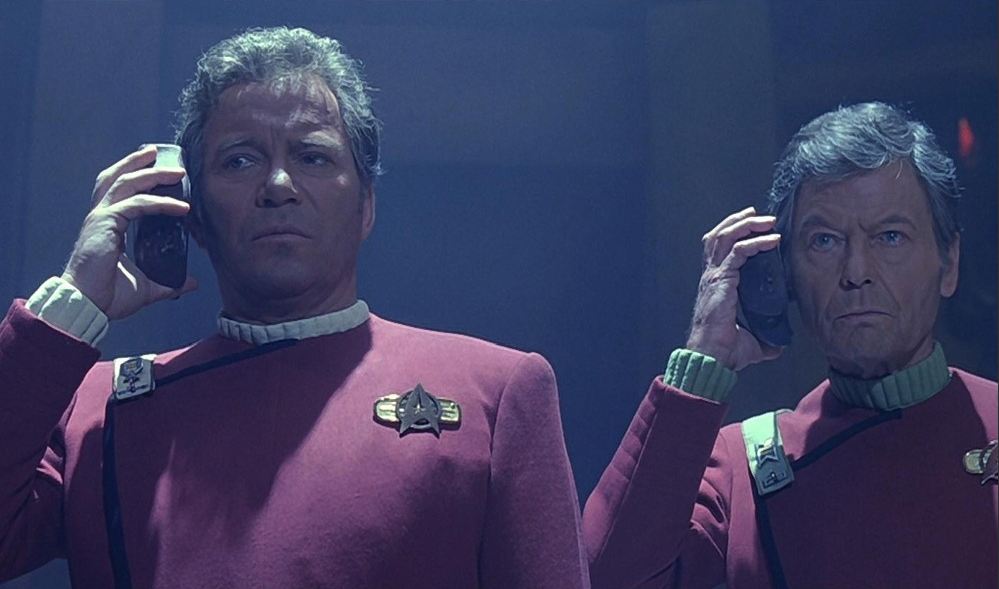
Kirk and Spock's stunt double battle to the death!
This one is easy. It's currently on Netflix in glorious HD. But don't start at the beginning, you won't like it. However, unlike modern shows, it got good very quickly. Start about halfway into the first season and then watch through the second season. If you need an even more abbreviated schedule, try the episodes "Balance of Terror," "The Galileo 7," "Space Seed" (prequel to Wrath of Khan), "Errand of Mercy," "The City on the Edge of Forever" (consistently voted the best Star Trek episode),  "Amok Time," "Mirror, Mirror," "The Doomsday Machine," "I, Mudd," "Journey to Babel," "The Trouble with Tribbles," "A Piece of the Action," and the only entry from season 3, "The Enterprise Incident." For you modern kids, the episodes all feature a 2006 40th Anniversary restoration which features new (but retro) digital effects.

2) Star Trek Films

You do not need to watch all of the films. I actually advise against it unless you are really devoted. But you do need to watch some of them in a certain order. Some of these films will be sporadically available on Netflix, but not all, which, unfortunately, means you'll have to find a friend that owns them.


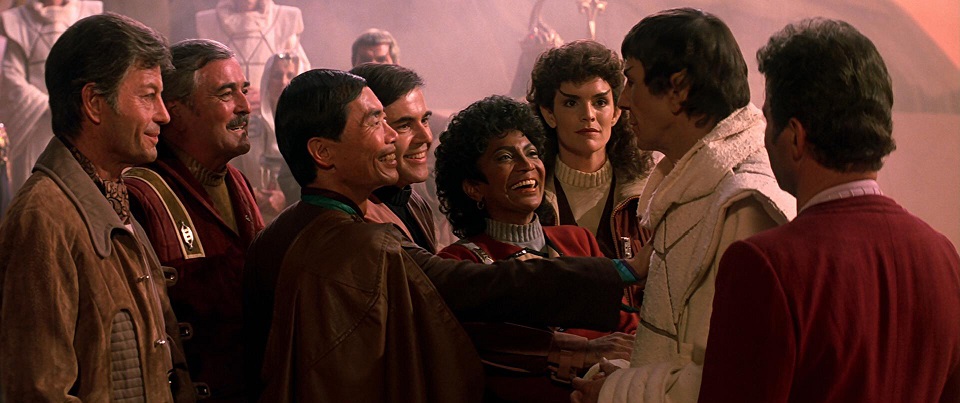
Star Trek II: The Wrath of Khan - the one that made Star Trek real

Star Trek III: The Search for Spock - the one that made Star Trek feel

Star Trek IV: The Voyage Home - the one that made Star Trek funny
Star Trek VI: The Undiscovered Country - the one that ended the Cold War

Star Trek: First Contact - it has the Borg.

You'll notice I only listed four of the original six films. As I indicated prior, there have been many creative influences on Star Trek. These films represent one creative direction that tells a unified story, and it is this thread that maintained Star Trek in the 1980's, paving the way for the series' that followed. This is "the good stuff," and its very good. It is these films that establish the Star Trek cast as real characters. The original show presented great archetypes but ultimately didn't allow for character growth due to the format of 1960's TV. These films change that, as they grow old and truly become friends. The JJ Abrams films synthesize the characters of these films with the hijinks of the series.

3) Star Trek: Enterprise

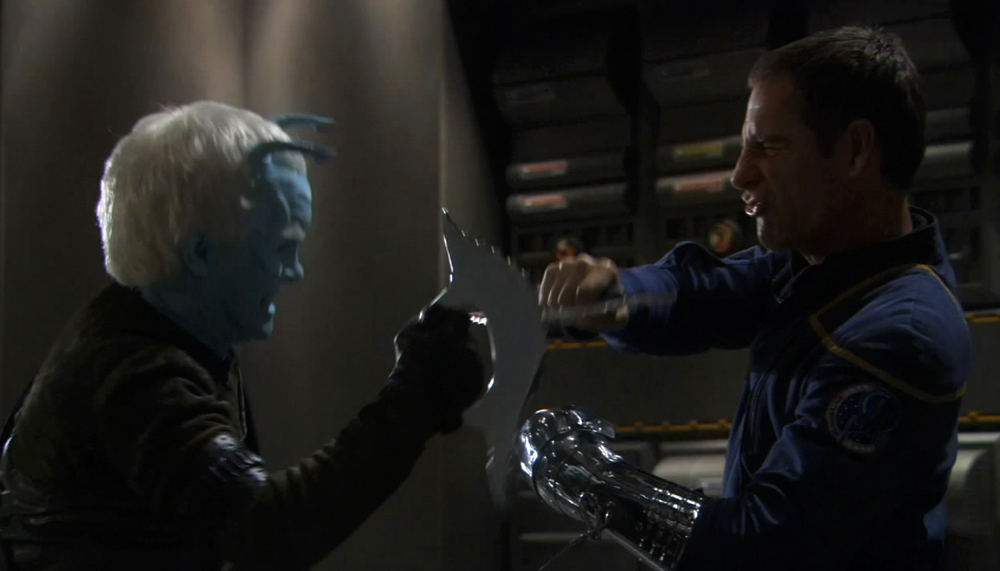
In a way, this is a proto-version of what JJ Abrams eventually succeeded at, which is to attempt to recapture the energy and spirit of the original series with new actors. A straight reboot was considered unthinkable, but a prequel series was deemed practical. An excellent series lead in Scott Bakula really sets this series apart. Since the original, no Star Trek captain was really able to headline the show (Patrick Stewart, while excellent, was still more the head of an ensemble). Bakula's Archer was a kinder, more respectable Kirk, less womanizer and more everyman. Starting out adventurous and curious, he develops more of an edge as the series progresses, eventually almost being spiritually isolated on the show. He is supported by an excellent cast, and one of the great unsung heroes of Star Trek, writer (and fourth season Showrunner) Manny Coto. He and Gene Coon (from the original series) are probably the two best writers to have shaped Star Trek. The connections between this series and the Abrams films are clear, as the new films serve as a better sequel to Enterprise than the original series really could. This series is also available on Netflix in HD, and you should watch the third season (a season long story arc) and much of the fourth. As a fairly recent show (canceled in 2005), it's very palatable to a modern audience. A small "resurrect Enteprise on Netflix" movement has quietly begun on Facebook in the wake of leaked information indicating its Netflix viewing figures are very good.

4) Star Trek and Star Trek Into Darkness

JJ Abrams' films that are more films based on Star Trek than Star Trek films. Very entertaining, capturing much of the fun and essence of the original. Good entertainment, buy a ticket. I can't review STID yet because its impossible to do without spoilers. But it's worth it. Interestingly, Leonard Nimoy, who was practically exiled by the Star Trek powers that be from 1994-2005 after directing 2 of the films and executive producing one (all three of which are on my list), really supports these films because he feels they honor the work he and his colleagues did in the 60's.

5) Other Stuff

Geek Trek...
Now I left a ton of stuff off this list! I'll explain why. I hate Voyager. I've tried Deep Space 9, and while I'll admit the concept sounds cool, I have never been able to enjoy it. Watching "The Trouble with Tribbles" back to back with its DS9 homage tells you everything you need to know: it's just not fun or funny. What Deep Space 9 and Voyager are is geeky. That's not a bad thing, but it does make them niche. If you like minutiae and techno-babble you will enjoy these series. Best wishes to you.

Finally: Star Trek The Next Generation

90's Airline Crew
To many people my age and older, this "is" Star Trek. The Shakespearean, android infested, techno-centric vision of Star Trek. Gene Roddenberry's late in life attempt to retake Star Trek (after Paramount removed him following the creative failure of the first film). In tone, Next Gen follows closely that first film, largely devoid of fun and hijinks, but heavy on philosophy. The original combined philosophy with fun. The films tended to embrace the fun, while Next Gen zeroed in on the philosophy. This was largely due to technical constraints (the series was produced on video and has only recently begun to be restored from its original negatives, and intensive and expensive process). The series produced many legendary Star Trek episodes such as "The Best of Both Worlds" and an excellent finale "All Good Things," but I cannot recommend it as essential Star Trek viewing. It's dense, long, and cultish; though it was intensely popular when it aired. Check it out, if it appeals to you, great. But if you are a newcomer, attracted by the characters and relationship types of the original, Next Gen will not appeal to you the same way. That said, of all the Star Trek spin-off's, it is the most original.

Click here for more movie reviews.

Thursday, March 28, 2013

"The Bible"

Updated: this series is now available to stream in HD on Netflix. Jeremiah also reviewed the series.

Original Post:

Those of you who read my posts know I get very passionate about films. I love films and I love the medium of visual storytelling. A good story is hard to come by, so when I see one I latch onto it and don't let go. My latest obsession is not a blockbuster, but a modest $22 million project; the ten-hour television miniseries entitled "The Bible."

David, with his friend Uriah,
invades Jerusalem.
This title is both deceptive and shockingly descriptive. For you see "The Bible" is not the scriptural summary it might lead you to think it is, but a lean, focused story about Jesus Christ. Don't let the fact that it spends 5 hours on a selection of Old-Testament characters fool you. Their stories are incredibly abbreviated, and though there are still two hours yet remaining, they have already spent four times the amount of screen-time on Jesus then they have on anyone else. This reveals a hidden bias on the part of the filmmakers: the the message of the Bible is primarily about the redemptive mission of Christ, and that the earlier stories primarily exist as the context and introductory chapels of the main narrative. That we should see the sacrifice of Christ in the context of the proposed sacrifice of Isaac, the deliverance he brings in light of Moses and Joshua, his kingship in light of David, and his faithfulness and power in light of Daniel.

Moses, as deliverer, is a Proto-Christ.
If you've read the Bible, you know the story. What's impressive is how closely the series adheres to it. It is surprisingly Protestant in its depiction. Now yes, I'm sure you've heard about the myriad departures and omissions made by the creative staff. But if looked at from the perspective of the many adaptations we've seen over the last ten years, its extremely faithful. More faithful than "The Hobbit" or "The Fellowship of the Ring." If you are looking for an exact visual record of the text of Scripture you will be disappointed. But there is no better way to experience the story of God's redemptive plan this Easter season than watching "The Bible."

The series is beautifully shot in Morocco, and since they shoot all the installments in the same general area, you see great continuity between the time periods. The actors are all unknown in the United States (though if you are like me, you might spot an Indiana Jones villain in there somewhere), and they use a wide ethnic diversity to represent a variety of characters. This is a reaction to the reality that most Bible characters were not British, or likely even white. Jesus is played by a Portuguese actor, angels by a variety of ethnicities, and yes, Samson by an African. If this offends you, I challenge to examine your pre-conceptions of the Bible. Many of the extras are clearly of North African descent (leading to some humorous comparison between one of the characters and President Obama), but again, this is due to the location of the filming of the series.
Only Jesus can throw the stone.

So now you're sad you've missed the show. Even though the first episode was the cable event of the year with 13 million viewers, and subsequent installments have hit 10 million, you weren't among them. Only one more episode left to air (and on Easter night) on the History Channel. Well I have some suggestions for you.

1: History will probably re-air them. If you have cable you can watch for free.
2: iTunes currently sells a season pass at a very reasonable price. Downside: cut up into hour installments instead of the 2 hours they were aired in. Also poor sound mix.
3: The series gets released on Blu-Ray and DVD on April 2nd, two days after Easter. This is the best way to experience the series, and a wonderful way to host showing for your friends and neighbors.
4: UPDATED in 2014 - the series is now on NETFLIX, in HD, with surround sound, and a spanish language track as well. For those of you with Netflix accounts, this just became a no brainer.


I am a huge fan of this series. Even the soundtrack is top notch with work by Hans Zimmer. I cannot recommend it to you enough. So from me to you, Happy Easter.

Click here for more movie reviews.

Thursday, January 3, 2013

My Year in Ticket Stubs

So, as I was cleaning my room tonight this is what I found:

Tickets to: 


  • Gettysburg Battlefield (12/10/11)
  • the Nutcracker (12/11) 
  • The Hunger Games (3/25/12)
  • Midsummer Night's Dream play (3/30/12)
  • The Avengers (5/4/12) 
  • Avengers (5/10/12) 
  • Avengers (5/20/12) 
  • The Avengers (5/29/12)
  • Brave (6/23/12) 
  • Bourne Legacy (8/11/12)
  • Amazing Spiderman (8/21/12)
  • Colonial Williamsberg (9/12) 
  • Dark Knight Rises (9/12/12) 
  • Values Voter Summit Gala (9/15/12) 
  • Disney World (9/28/12) 
  • Ryan Rally VIP ticket 
  • Argo (10/27/12) 
  • Romney Rally VIP ticket  
  • Wreck-It-Ralph (11/9/12) 
  • Skyfall (11/18/12)
  • The Hobbit (12/15/12)
  • Les Miserables the play (12/15/12) 
  • The Hobbit 48 FPS (12/24/12) 
  • Les Miserables (12/26/12)
There is a reviewer who ranks movies as the year goes on. Do you all think I should do that too? This is what it would look like. 

I guess I can make a chronicle of my life based on my messy room. Did you see any of these things? What was your favorite? 

Posted by Jeremiah Lorrig

Click here for more movie reviews.

Friday, December 21, 2012

The Relevance of The Hobbit Today - Review (Part III)

I saw the film the day of the tragedy in Connecticut. With that on my mind, there was one line in particular that spoke to me out of the film. It does not represent, I think, current conventional thinking in America, certainly not among the ruling elite. Gandalf says to Galadriel, "Saruman believes it is only great power that can hold evil in check, but that is not what I have found. I found it is the small everyday deeds of ordinary folk that keep the darkness at bay. Small acts of kindness and love." In my heart, my thoughts turned to the Adam Lanza's of the world. No power of man can prevent what the insane (either physically or morally) of this world will decide to do. But perhaps small acts of kindness and love, when they start to add up, can disarm even the angriest rage or the most terrible hate. Jesus said to love your neighbor as yourself. He said blessed are the meek. In a world where people actually followed these teachings, would even the mentally ill feel so alone and unloved that they would need to tear down the fabric of society to attempt to ease their pain? I don't think we can ever truly know the answer, as evil will always be at the door, attempting to inflict more pain where there is none. But the thought, at least as I sat there watching the film, gave me hope.

Another, perhaps more controversial, aspect of this story, has to do with the dwarves as (rather obvious, I thought) stand-ins for the Jewish people, exiled from their homeland for generations. When Tolkien wrote The Hobbit, there was no State of Israel. The homeland of the Jews had long been ruled by other nations, and Tolkien, with his Western European education, would have most likely often thought back to the Crusades when thinking of the sort of ancient warlike situations he dealt with. The modern, shall we say, egalitarian view of the Crusades did not yet exist in England in the 1930s. It is quite possible that Tolkien thought of "Sarrasins" in "Orcish" terms. The film gives this even more weight, with talk of "others" going back to seize their homeland if they do not hurry. In Tolkien's day, after the First World War, the Middle East was being continually divided up by the western powers, with little thought being given either to the Jews or to the local inhabitants until 1945, long after The Hobbit's publication. So this story, in an odd way, is perhaps Tolkien's own little fantasy of how a very British person (for Bilbo is very mid-century British) could have potentially helped a group of nomadic Jews setting out to reclaim their ancient homeland. It's the very sort of mythic, Homer-esque (no, not Simpson) epic that Tolkien himself was drawn to, and writers often attempt to aspire to what they love.

Bilbo's eventual realization that he should help these dwarves simply because he can; because he possesses something they do not, is precisely the sort of "love thy neighbor" idea that no one really practices anymore, and thus is not considered "realistic." Our movie heroes must have some pragmatic goal in mind; Batman must be a "symbol" to inspire, because simply saving a couple people on his own really won't change much in the overall scheme of things. Superman must be darker and edgier, because a man who simply flies around saving cats and stopping bank robbers really isn't that interesting anymore. So, in this sense, Bilbo is now the ultimate "anti"-hero. I, for one, think we need more such "anti"-heroes, who are capable of committing acts of kindness, and love, for no good reason at all.


Jump back to Part I, or Part II - An Unexpected Pleasure.

Click here for more movie reviews.

Thursday, December 20, 2012

The Hobbit: An Unexpected Pleasure - Review (Part II)

"I did not give you that map and key so that you could cling to the past." I loved The Hobbit: The Unexpected Journey. I saw the film in 3D (conventional 3D, so there will be no discussion of the controversial 48 Frames Per Second issue here) and found it quite beautiful and immersive. Having seen it again since in 2D, I will say that I felt my eye actually had more to see in the 3D version, and so the film seems edited to favor the 3D experience, which makes sense, considering it was filmed in native 3D using 2 very high definition cameras.

Spoilers for The Hobbit: An Unexpected Journey follow:

The film is a very fun adventure story, and so very unique in our time. It is based on a third of a book, though I think it would be more accurate to say it is based on a third of a story. Tolkien wrote the entire history of Middle Earth in his books, and this film takes as its inspiration events during this time in that history, not limited solely to events written in The Hobbit itself. It may come as a surprise to many casual book fans that most of the "additional" material presented is not made up; no characters were introduced that do not appear elsewhere in Tolkien's writing, and character histories are, for the most part, respected. Scenes such as the battle outside Moria and the Necromancer are almost entirely lifted from other Tolkien writings, and I think they are well used here. As a child, I was very interested in the Necromancer and Dol Guldor, which Tolkien only briefly references in the book, and am very interested to see Benedict Cumberbatch (of Sherlock fame) play this pre-incarnate version of (spoiler!) Sauron. Since no comprehensive account of this battle between Gandalf and the weaker Sauron exists, this could be quite interesting, especially since, in The Lord of the Rings, Gandalf is clearly afraid of his enemy, and considers him now beyond his skill. (Part of me also hopes the Witch King of Angmar gets his own HBO show, as his history is further hinted at here, and there is enough payoff in The Return of the King to justify a little more of it in the next film). This aspect of the trilogy's plot, which I thought was well set up in this installment, has me the most intrigued, because it is the most original part of the films, and I am curious to see what happens.


I was also pleased at the inclusion of Radagast the Brown Wizard, and shocked and delighted by his depiction. He was actually featured in The Fellowship of the Ring, but removed from the film version. He really gets his moment to shine here though, and I hope we have not seen the last of him. I found the moments of absurdity in the film, such as his rabbit sled, very entertaining. I also enjoyed the depiction of his (and Gandalf's powers) in the film, which are more robust than in The Lord of the Rings. I look forward to the battles between the wizards and the Necromancer; I wonder if Radagast will face death (since he is not in Lord of the Rings, and even in the books, I thought he might be useful), and if Saruman will be guilty of any sort of early treachery. I'd also like to praise their efforts in executing Christoper Lee's return, as his health precluded any trips to New Zealand. They were able to film his dialog on a green-screen set in London, built to match the dimensions of their set in Wellington. I'm not sure if he and McKellen were ever in the same room, but their chemistry was trans-continental.

Speaking of which, this was Gandalf's movie. Ian McKellen gets top billing for the first time (does this make him eligible for Best Actor?) and he earns it. He glides through this film, firmly rooting it and just making it awesome. Gandalf really is, as Saruman calls him, a "meddler," and is orchestrating this whole situation to a purpose. The interplay between these great "guardians of Middle Earth," sent by divine powers is fascinating. I was also struck that of all the wizards, he is the one running around on catwalks with a sword, cutting great goblins to bits, and force pushing orcs into oblivion. It's a very active life for a wizard in any franchise.

I also appreciated the structure of the film itself. Many more critical of the film than I (including some in my family), found the film boring. The film does spend quite a bit of time in Bag End, toward the beginning. This is because the whole sequence is largely preserved as Tolkien wrote it. This sequence is his true introduction to Middle Earth, and if at some point anyone watches these films starting with The Hobbit, that scene will be crucial. It's the slow introduction to fantasy that often works well with first installments; the original Star Wars is structured similarly. It also lets us feel Bilbo's reluctance. If he is off on his adventure in the first ten minutes, we might be tempted to believe this is ordinary in Middle Earth. But the time it takes to convince him proves it is not. In this way, the film becomes a strong character piece for the titular hobbit. They then do begin their journey, pursued by Orcs. I do wonder if Gandalf's question, "who did you tell?", will get answered in future films. We are not given the answer, but I do wonder if the dwarves have a traitor in their midst? Azog the Goblin, played via motion capture by Manu Bennett, is a formidable opponent. I guess what I really liked about him was he is different from the other Orcs we have seen, more wild, and dangerous. CGI characters do not generally bother me in fantasy films, as I don't find a man with makeup and plastic on his face to be more convincing. Azog is sort of the General Grievous of the movie, and I liked Grievous just fine. Same goes for the Great Goblin himself, who reminded me of Jabba the Hutt, in the best way possible. The Lord of the Rings featured many villains, but none of them were particularly comical, and I enjoyed the change. I also really liked the goblin messenger, who reminded me of Jabba's court jester in Return of the Jedi, also in the best way possible. I enjoyed the structure of the film, featuring set up, light action, then rollicking Indiana Jones style action (Goblin town felt like a very 21st century Temple of Doom) leading into the finale. Much like they did with The Fellowship of the Ring, they were able to craft an ending to the first installment that felt both like an end to this part of the story and also teased what was to come. I am excited for the audiences to see what happens next as the worst is definitely not behind them.

Of course, the MVP in all this is Martin Freeman as Bilbo. When he was first shown on screen I instantly thought that he was more like Bilbo than Ian Holm was. Peter Jackson is not George Lucas; as such he creates minor inconsistencies as he goes and ignores them. In Fellowship, Gandalf says Bilbo hasn't aged a day. He clearly has. Of course, in Fellowship, Gollum is black skinned with yellow eyes, so visual continuity is not paramount in this series, and I was ok with that, because I felt this film was true to itself; in particular, this Bilbo is true to himself.

Freeman plays every aspect of this character at once, creating a beautiful inner conflict that is a joy to watch. He is at once out of his element and yet embracing his new element as best as any normal person could. He takes to fighting in a way which we never saw Frodo, which makes him the coolest uncle you could ever have. He is also quintessentially British. Elijah Wood and Sean Astin were both Americans, feigning accents. Of the original four hobbits, only Dominic Monaghan was actually British. So, there is a certain restraint in Freeman's performance that I don't believe we saw in any of the hobbits in the previous three films. In that way, he brings real humanity to a role that could have easily been played as a very over-the-top caricature.  His groundedness allows us to enjoy the other, more fantastical aspects of the film.

I highly recommend this film if you enjoy fun, entertaining movies. If you hate fun, comedy, CGI, or good british actors, don't go see this movie. I for one love all of the above.

Update: I've since seen the film in 48 frames-per-second, and while I do now believe that 3D is the best way to view this film, I found the seemingly accelerated motion distracting and detracting from certain strong actor performance moments I noticed at the standard speed.

Click for part 3 of my review, "The Relevance of the Hobbit Today,"
Or, go back to Part I.

Click here for more movie reviews.

Wednesday, December 19, 2012

The Hobbit: An Unexpected Journey - Review (Part I)

There is a disturbing trend happening with major movie releases these days. According to critics (and many audience members), a new film is either an amazingly surprising hit, or it is a disappointment. This verdict can almost be completely pre-determined by the collective expectations preceding the film's release. With almost no films budgeted over $100 million based on original material, all major releases are either sequels (or prequels, which are still actually sequels) or based on other media such as books, tv shows, comic book characters, or, rarely, plays; which means that each has dedicated fans who have very ingrained pre-conceived notions about what their favorite thing is really all about.

Calypso and Assante from
"The Odyssey" (1997)
Before 2001, this was why most successful works of fiction were not made into films. The conventional wisdom was that film adaptations could not do major works of fiction justice. One only has to watch the Armand Assante version of The Odyssey or the BBC productions of The Chronicles of Narnia to see that this is true. Even most comic book films of the period were dismal both in their quality and in their ability to translate what millions loved into something that worked on the screen.

But The Lord of the Rings: The Fellowship of the Ring (2001) changed all of this. A hit with fans of the book and general audiences alike, this film opened the door to what has become a decade of, well, unoriginality at the movies. So, in 2012, the tentpole releases were The Avengers (sixth in a series), The Dark Knight Rises (third, or seventh, or eighth, depending on how you count), The Bourne Legacy (fourth), Skyfall (23rd), and now The Hobbit: An Unexpected Journey. With The Avengers, many doubted that anyone could make a film with so many super heroes in it work. They were pleasantly surprised that it did work and so one of the slimmest plotted films of the year went down as one of its best. Whereas the critics were expecting the second coming of Christ with The Dark Knight Rises, and instead greeted it with indifference, perhaps not liking so much what it had to say.


A similar phenomenon occurred with The Hobbit: An Unexpected Journey in that The Lord of the Rings Trilogy is one of the few films of the last decade everyone can admit to liking without drawing looks of disgust from one corner of the room. So, many in the media were looking forward to experiencing a new revelation in cinema. Suffice to say they did not. Nor should they have.

Tolkien's The Fellowship of the Ring is arguably his greatest single work. The amount of character development and pathos in that book is unmatched in his other writings. If you've read The Silmarillion, you know he actually writes in a very distant, objective style. This is actually one of the reasons The Hobbit is such a short book, page count wise. The stone giant sequence in the film that has been criticized by many is straight from the book, but it only occupies one sentence. It is not described. But in those days, people weren't as critical (or so it would seem), and this was not considered a problem. When translating such a story to film, where things are shown, and not told, one cannot avoid depicting such a fantastic sight. Tolkien's writing is full of such little asides and tangents that are irrelevant to the overall plot but essential to the atmosphere of his fairy tale world.

Daniel Craig in "Skyfall"
The Hobbit simply isn't as strong a book as The Fellowship of the Ring; however, it's a great book. It's a funny book, a moving book, a (melo)dramatic book, and a wonderful story. But it is different; and movie goers (and especially critics) don't like "different." They say they do; they will say "this film breaks new ground," or it "defies the stereotype," but it actually doesn't. Skyfall earned a lot of praise for being a "different" kind of Bond film; when in reality, it simply wasn't a Bond film. Had that same film been made under a different name or with a different character, it would not have merited their notice, because it is exactly like every other action film of the past five years. It is in essence not "different," but in line with the styles of the time; this dark, "ultra-real," "gritty," aesthetic that is currently in vogue, where no CGI is used and lots of people die horrifying deaths. In Skyfall, our "hero" saves no one, and does nothing remotely heroic. This was loved by the critics of our day. "The Hobbit: An Unexpected Journey" does not fall in line with this aesthetic, and therefore has not earned their favor.

Continue on to Part II - An Unexpected Pleasure.
Or skip to Part III - The Relevance of the Hobbit Today.


Click here for more movie reviews.

Friday, July 20, 2012

The Dark Knight Rises: The Apocalypse


No article about The Dark Knight Rises can be written at this point without honoring the victims of the horrific shooting that took place in Aurora, Colorado last night. It is tempting to search for some sort of meaning in an event like this, either to condemn something we don't like or support something we do. Ultimately, this event defies explanation. It was a senseless act of violence. We don't yet know if anything specific precipitated it, but until we do, I suggest we mourn and pray for the victims.

The following article does contain spoilers. I will attempt to be tactful, but it is meant to be a serious discussion of the film, not a cursory review to encourage you to attend.

Batman Begins was the genesis of Batman. The Dark Knight had a strong sense of immediacy, relevance, and tangibility; it was Batman today. So with Batman Begins as the past of the character, and The Dark Knight as the present, The Dark Knight Rises becomes a look at the character's future. It is in essence apocalyptic. There is a certain level of detachment from the proceedings that to my view is the cinematic equivalent of peering into the future. This seems necessary because while the events of The Dark Knight certainly pushed the limits of what we have collectively experienced in the modern world, the events of The Dark Knight Rises go beyond anything in our modern American experience. This makes it less accessible, yet perhaps, in time, we may start to see this film as a sort of prophecy as to where we are headed.

It is appropriate, then, that this film, like Batman Begins, has more elements of the fantastical than its middle, grounded predecessor. It is still, at its core, a comic book movie. One of the things I originally noted about The Dark Knight was that its plot followed the patterns of one of the darker graphic novels, and not the simple build of most films. The Dark Knight Rises also seems to play out as a sort of novel, with large time jumps taking place within it. At midnight, on first viewing, it can be somewhat hard to keep up with, though I expect clearer heads and repeat viewings will clean most of that up.

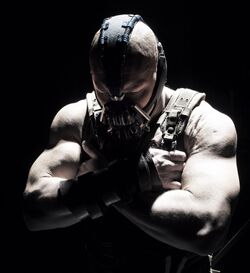
Let us speak first of Bane. Christopher Nolan has spoken before of his fondness for Bond films (a ski sequence in Inception hearkened back to On Her Majesty's Secret Service as well as The World is Not Enough). I caught many shades of Renard from The World is Not Enough in his character, though Bane has a much better and poignant backstory than his Bond counterpart. Unlike the Joker, Bane has a plan, a backstory, and feelings. He is scary. The fantastic opening scene shows us just what this man is capable of. He is a mirror for Batman, but he has not lost sight of himself and his purpose like Batman has. Which leads us to what I think the key of the film is, Bruce's hubris. He became legend, and then left at the top of his game in what he thought was a noble lie. Now he thinks he can just step back into it. He completely underestimates Bane, and opens himself up to all sorts of manipulation due to his own pride and apathy. In fact, every bad thing that happens in this movie is a result of his own disengagement with the world. His hubris, his lies, and his foolishness result in his punishment. Throughout the series, we've seen him trained by evil only to then take the tools of evil and attempt to use them for good. He then lies to the people to save them. As Bane says, "you put on the darkness. I was born in it." Batman's tricks do not work on Bane. Bane does not fear the dark knight. It is only after suffering a horrible penance that he can regain the conviction and strength of character necessary to truly save Gotham and finally be free.

 AnneHathaway's Selina Kyle is a compelling character. From the beginning, Bruce sees something different in her. Yet even here he is vulnerable to hubris. Many parts of this film feel closer to the comics than either of the previous two installments. Not so much in tone, but visually. Nolan eschews some of the complete realism he embraced in The Dark Knight in exchange for something more visually operatic. Even the conclusion of the film is far more bombastic than anything we saw in The Dark Knight. As I compared this to the Star Wars trilogy, the first and third films have Death Stars. While the microwave gun itself does not make a reappearance from Batman Begins, a super weapon unwittingly built by Wayne Enterprises does play a part, and again is part of Bruce's detachment and apathy. When he was actively involved during the time of The Dark Knight, Wayne Enterprises didn't make such silly things.

This is not the triumphant third installment one would expect. Unlike the previous two films, which largely stood on their own, this one relies heavily on the others for its emotional punch. It feels most like "an installment," mostly I assume because of the long time jump. There is a lot of ground lost between the second two films, whereas the first two bridged seamlessly. Yet, at the same time, it feels almost like a direct sequel to Batman Begins, with the events of The Dark Knight sort of tossed into the middle. As you can tell, I am still processing the movie.

This is not The Dark Knight. This is not more of same. This is a completely new and different beast. Batman Begins could be compared to the first Superman. The Dark Knight was Heat on steroids. The Dark Knight Rises defies comparison. I need to see it again.


Click here for more movie reviews.
Related Posts Plugin for WordPress, Blogger...