Tuesday, May 22, 2012

Historical Revisionists Strike Again

One thing I hope our readers know is that although conservative, I do my best to remain intellectually honest and not give free passes to my political allies. If anything, I’m actually stricter towards those I agree with. I greatly dislike finding out I was mislead.

So I’m calling foul on David Barton.

He has a new book out on Thomas Jefferson entitled The Jefferson Lies. (Which I have ordered from my library to look through and possibly review. However, I am not linking it because this is not an endorsement.)

According to the book description, this work is supposed to “correct the distorted image of a once-beloved founding father, Thomas Jefferson.”

Through Jefferson's own words and the eyewitness testimony of contemporaries, Barton repaints a portrait of the man from Monticello as a visionary, an innovator, a man who revered Jesus, a classical Renaissance man―and a man whose pioneering stand for liberty and God-given inalienable rights fostered a better world for this nation and its posterity. For America, the time to remember these truths again is now.

“A man who revered Jesus.” How does that square with Jefferson’s famous bible? Barton explains on his website: “What Jefferson did was to take the ‘red letter’ portions of the New Testament and publish these teachings in order to introduce the Indians to Christian morality.”

Christian morality maybe, but certainly not Christianity. Even if the part about evangelizing the Indians is true (and it’s historically dubious), Jefferson’s bible is certainly not merely a simplified edition. In a letter to Adams, Jefferson described it as a fixing of the historical record:

We must reduce our volume to the simple Evangelists, select, even from them, the very words only of Jesus, paring off the amphiboligisms into which they have been led, by forgetting often, or not understanding, what had fallen from him, by giving their own misconceptions as his dicta, and expressing unintelligibly for others what they had not understood themselves. There will be found remaining the most sublime and benevolent code of morals which has ever been offered to man. I have performed this operation for my own use, by cutting verse by verse out of the printed book, and arranging the matter which is evidently his and which is as easily distinguished as diamonds in a dung-hill. The result is an octavo of forty-six pages.

You can read the result for yourself. As it shows, the "amphiboligisms" "misconceptions" “dicta” and "dung-hill" cut out by Jefferson include all the miracles as well as the resurrection, reducing the gospels to a mere "code of morals." If Barton thinks that’s orthodox Christianity, he fails not only as a historian, but also as a theologian (ironically, his background is theology, not history, and we already knew he had difficulty distinguishing between Christianity and Mormonism.)

A review in the Wall Street Journal nails this point exactly:

Jefferson was "pro-Christian and pro-Jesus," [Barton] says, although he concedes that the president did have a few qualms about "specific Christian doctrines." The doctrines Jefferson rejected—the divinity of Christ, the Resurrection, the Trinity—are what place him in the camp of the deists and Unitarians in the first place. It was Jefferson's difficulty with these doctrines that persuaded his close friends Benjamin Rush and Joseph Priestley that Jefferson's skepticism went beyond anything even these latitudinarian believers could endorse.

I don’t dispute that Jefferson was a very influential founder, or that he made immense contributions to the nation (although he was also a mass of contradictions). But to claim him as a devout evangelical Christian is to make Christianity subservient to political ideology. It is no different than the often complained about practice of liberals claiming Leonardo da Vinci, William Shakespeare, or Abraham Lincoln was homosexual. With claims such as these Barton has crossed a line that no Christian or historian should cross. He has redefined orthodox Christianity to exclude the divinity of Christ, and he has rewritten history to serve his political ends. Barton has done to Jefferson what Jefferson did to Christ - rewrote history to exclude the inconvenient parts and then justified it by claiming to “fix” the record.

The word for that is propaganda.


Sunday, May 20, 2012

Thank You

A big thank you to our readers for making May 2012 our highest read month yet. And we still have 10 days to go!

We have over 2,800 pageviews so far this month. Our very first month (February 2011) we had 384.

Saturday, May 19, 2012

Homeschool Fantasy: A Review of the Inheritance Cycle

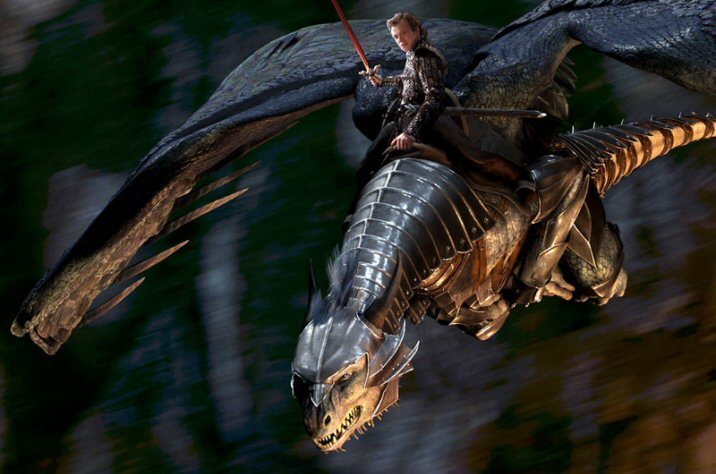
Christopher Paolini’s Inheritance Cycle is a homeschooled kid’s fantasy. Yes, it has a youthful protagonist who stumbles upon an impossible yet predestined quest (stop the near invincible antagonist). Yes, it has swords and dragons and dragon lore. It has magic-wielding elves, fortune-telling herbalists, clans of dwarves, and even werecats. And in this four part epic story, there is also the fantastic fulfillment of an adolescent dream.

Paolini is hardly the first teenager, homeschooled or not, to write stories. Inspired by favorite stories or films, they concoct wild tales with less direction than finesse. If persistent, they construct outlines and draft a few tortured chapters. If bold, they share with family and friends. Their output, mercifully, is usually euthanized when the family computer expires and is replaced.

But Paolini was inspired, persistent, and bold. At an age when most kids are progressing from simple algebra to simple trigonometry he sketched a complete fantasy world, and with it the trajectory of the entire Inheritance Cycle. He then showed the draft of the first book, Eragon (with his parents, impressing them enough that they published it through their home business and launched a family book tour. The tour failed, but it did put Eragon in the hands of a published author, who passed it on to a big publishing house. After a full round of editing, Alfred A. Knopf re-published Eragon and turned it into a best seller.

Despite the success of Eragon (including a feature film) and the ensuing books, I found considerable criticism as I researched for this review. Some of it is justified; the writing is sophomoric at best and the storytelling suffers from this and other maladies of inexperience. My notes are laced with invective on these points. Since the author was indeed a sophomore when he did most of the writing, I decided not to share them.

Other reviewers complained that Paolini created his fantasy world by ripping off a dozen other authors, adding little to nothing of his own. This is a common complaint against even the greatest fantasy writers; only Tolkien seems to be sacrosanct when it comes to borrowing versus stealing. In this case, the charge sticks because the world he created is firmly standard fare. His elves are haughty, sylvan creatures who outdo humans in both physical and magical pursuits. His dwarves are suspicious metalworkers who build vast underground cities networked by tunnels. The boy Eragon develops predictably in line with the quest motif. But stock characters are what define genres. You can only do so much with an elf before he is no longer an elf. Few authors can transcend genre, especially in fantasy. Tolkien was ahead of his time and produced a revered classic. J.K. Rowling wrote something truly original that outgrew all the rest. And more recently, George R. R. Martin has used the genre to play a Hobbesian tune, reminding us that life is indeed nasty, brutish, and short.

For most authors, including Paolini, art begins with imitation. And most artists spend a lifetime with little progress. The best learn to combine the basic elements with some originality, or at least to put new twists on the techniques of their forerunners. Only the transcendent actually create something new - this is why Picassos only come along once or twice per generation. So to conclude Paolini’s defense, it is in fact remarkable that a boy of 15 could create such a robust story by applying imagination to imitation.

Despite the above complaints, the story itself is truly compelling. The quest motif may be formulaic, but that diminishes none of its appeal as a great element in human narrative. It is David against Goliath (except Eragon gets to ride a fire-breathing dragon and share her thoughts and powers). The reader rides along, with romantic and irrational love for the underdog suspending despair. Paolini treats one theme with a great deal of maturity, and that is the intersection of hope, fatalism, and prescience. Eragon knows that he must face the evil and powerful Galbatorix. He knows the odds. But he will not relent. He continues to search for ways to improve his skills and find some new advantage for himself and his dragon. As long as people maintain their belief that they can manipulate outcomes, hope springs eternal.


Eragon also discovers a tension he must navigate as his power increases. He finds he is not so different from young Galbatorix, whose power eventually consumed and corrupted him. Galbatorix is the product of unchecked nature; Eragon responds to nurture as the hour of need insists he become both a great man and a good man. This tension builds as the stakes increase. Early in the story, Eragon chastises his friend Murtagh for killing a brutish Urgal when it might have been avoided. By the end of the story, he routinely and dispassionately performs the cruel calculus of war to find the lesser evil. The power and responsibility harden him, making him more like the fiend he must defeat.

These are the strongest themes; otherwise, the series is quite ordinary. The action scenes and battles should be the strongest, but they are hamstrung by weak writing. The panoramic descriptions are likewise rich in precision but devoid of grandeur. Paolini fails to satisfyingly develop most of the major supporting characters, and he too often resolves conflicts between individuals and priorities with perfunctory arguments and tautological reasoning. When he tries to make profound observations on basic human problems, he sometimes succeeds, but other times falls flat. For example, when the rebel forces capture a key imperial city, Eragon glibly instructs them to give all the slaves a gold piece and set them free. There is no assimilation plan to back this noble sentiment, and it is never mentioned again. When the rebels move on two pages later, the slaves are left without vocations or any guarantee of safety, presumably at the mercy of their former masters. Any 8th grade student of American history knows that you cannot amend slavery in two sentences.

The Inheritance Cycle is best regarded as a few hours of light summer reading, exciting but not especially enriching. It is strictly a tale of adventure, imagination, and dragons. There is enough violence to deter the very squeamish (battles, physical suffering, even torture), but not enough romance to deter the young lads who will appreciate the story most (Eragon’s romantic pursuits are far less successful than his primary quest). As a young adult offering, it makes a great gateway from Tolkien, Lewis, and Pullman to the wider fantasy landscape. But although a gateway, it will not ultimately stand out much from the crowd. I could perhaps rank it in the top 12-15 fantasy series that I’ve read; it might drop to the 20s with enough introspection. (That is less an indictment of Eragon than a nod to how wide and densely populated that greater fantasy landscape is.) But as an introduction, it serves its purpose well. And with the Inheritance Cycle, Paolini begins what may be a very promising career as a writer.

By Daniel Archer. Daniel is a friend and former classmate of ours at Patrick Henry College.


For more of our reviews click here!

Friday, May 18, 2012

Friday miscellaneous (5/18)

Actor Will Smith doesn’t mind paying higher taxes because he’s wealthy. But he thinks 75% is too high. His face when he hears that number (which is being proposed in France) is priceless.

Wasn’t it Abraham Lincoln who famously said something about not being able to believe everything you read on the internet? Anyway, apparently Wikipedia is fighting off fake history.

Oh, and in unrelated news, the Obama Administration staff got caught rewriting the Presidential biographies on the White House website. Which prompted another website devoted to uncovering those other historical events President Obama was able to attend.

This week President Obama announced his support for same-sex marriage. He may have just done Mitt Romney a huge favor.

And we all know President Obama doesn’t handle criticism well. But criticizing polls that don’t live up to his expectations may just be a sign of desperation. Although to be fair, he’s never faced a campaign as well organized as Romney’s.

You’ve seen The Avengers. But did you ever wonder what it cost to repair the damage to NY? One firm which seems to have practice in the field estimates $60-$70 Billion with secondary impacts of around $90 Billion. That’s the good news. The bad news?

Most insurance policies have special provisions for acts of war, civil unrest, or terrorism. Given the involvement of individuals considered deities in some cultures (Thor, Loki), there is even the potential to classify the event as an “Act of God”, although that designation would be subject to strenuous theological and legal debate. . . .

As a quasi-governmental organization, S.H.I.E.L.D. is in all likelihood protected from liability through sovereign immunity. While gratitude over repelling the invasion will persist in the short term, in the longer term the events leading up to the opening of the portal will in all likelihood be examined in detail,and that immunity probed for legal weakness (recall the regulatory and legal consequences to the Ghostbusters over the Gozer incident of 1984). In addition, there was considerable collateral damage of questionable necessity by at least one of the S.H.I.E.L.D. operatives (Hulk).

A friend of ours wrote an excellent review of The Avengers, especially working out the cultural and personality differences between Captain America and Iron Man:

On the one hand, there is Captain America; defender of justice, defeater of tyranny, and denouncer of every lofty, selfish ambition. Pride of patriots, yet the relic of a bygone era. It is no coincidence that the strongest iteration of this philosophy was given by an old man only a little younger than the good cap'n himself- but the genius of Joss Whedon is that it was given by a German old man.
…
Stark is the New Virtue, Captain America's true contrast.

And finally, it appears that the empire’s reach is growing.


Thursday, May 17, 2012

O Budget, Where Art Thou?

Yesterday was a budget day in the Senate. Five different budgets were voted on, and all failed. Most notably, President Obama's budget lost by a vote of 0-99. That's better than it previously did in the House, where it lost by the even wider margin of 0-513. So its fortunes are improving. Maybe next time it will get at lest one vote.

Second most notable, not a single Democrat voted in favor of a single budget. So it's not true that the Democrats believe in expanding every government department they find. The Office of Management and Budget is a prime example of their restraint. In fact, it seems to be the most under used agency at this time. Politically savvy Democrats can join the cut-government bandwagon by starting a campaign to get rid of the incredibly wasteful and unnecessary OMB.

Ok, enough with the spin. This is just a hugely embarrassing leadership failure.


I Like Lakes!

Mitt Romney is running for president and you know what? We both like lakes!

 This video is cleaver and shows just how much Mitt and I have in common.

In fact, we seem to share the same feelings on a lot of things, including Vampires! "I don't like Vampires personally, I don't know any."


This random post by Jeremiah Lorrig
Related Posts Plugin for WordPress, Blogger...